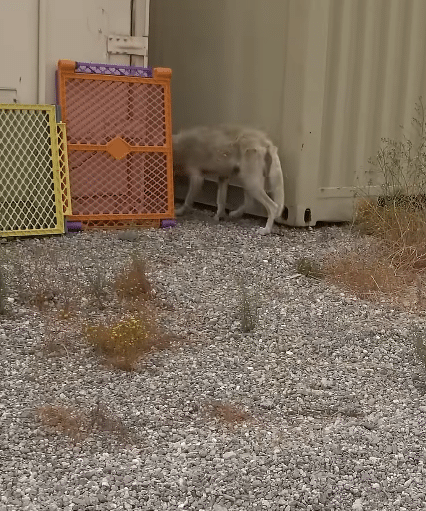
In a deserted industrial yard lined with metal containers and scattered construction debris, a large white dog moved cautiously between shadows.
His name would later be Tonka.
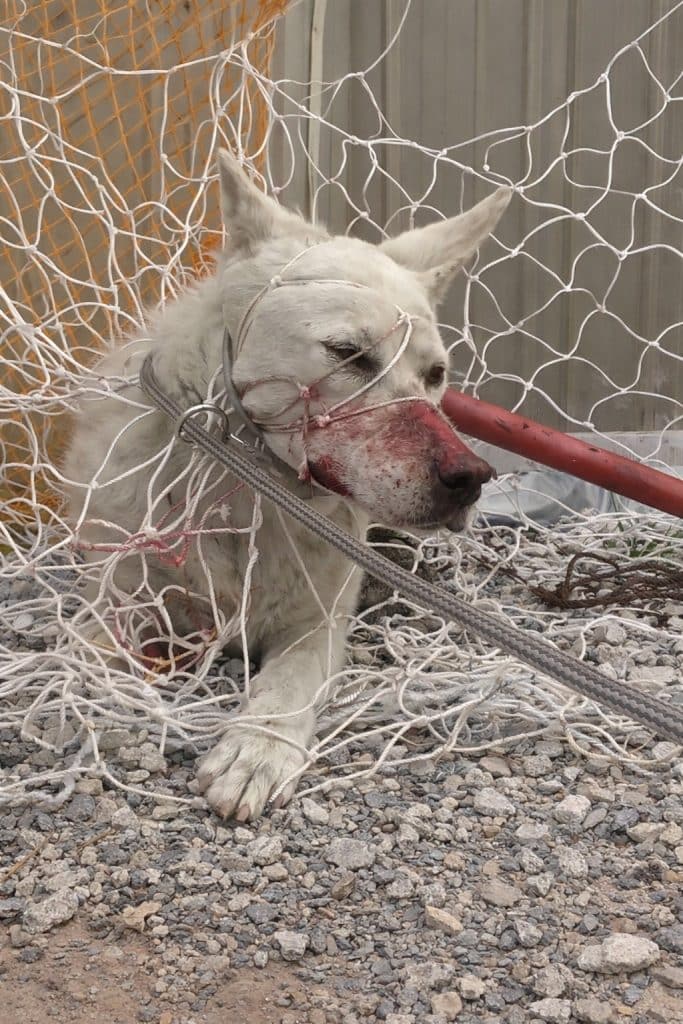
At first glance, he looked strong. But a closer look revealed the truth. His body was thin beneath the matted fur. His nose was scraped raw and reddened — likely from trying to dig, push through barriers, or search desperately for food.
He wasn’t aggressive.
He was starving.
And terrified.
Tonka rarely stood still.
He paced slowly, scanning every direction. Each sound made him flinch. Hunger pulled him forward; fear pushed him back.
That fear had likely kept him alive.
But it also kept him alone.
A rescue worker arrived and made a simple decision: he would not chase.
Instead, he sat down on the cold ground.
For hours.
Lowering himself physically to appear less threatening, he waited. He spoke softly. He avoided sudden movements. Food was placed gently along a path leading into a humane trap.
Tonka approached cautiously.
Video: Tonka’s Rescue — From Industrial Wasteland to the First Steps of Trust
He sniffed.
He stepped forward.
Then retreated.
Again and again, he repeated the same pattern — caught between the sharp ache of hunger and the deeper instinct to avoid confinement.
The internal battle was visible in every hesitant step.
For a moment, it seemed patience might win.
But survival instinct is powerful.
Something shifted — a sound, a movement — and Tonka bolted.
The plan had to change.
Rescuers carefully used a net to prevent him from running back into the industrial maze where he might disappear forever. The moment the net touched him, panic surged.
He struggled.
He growled.
He fought against the unfamiliar restraint.
In the chaos, his already injured nose began to bleed again from friction. The image was heartbreaking — not because of aggression, but because of fear.
He wasn’t fighting people.
He was fighting memories.
Through the net, a rescuer named Loreta knelt nearby. Her voice was steady and calm. She didn’t shout commands. She didn’t rush. She offered reassurance in a soft tone, allowing Tonka to hear something different from the fear inside his head.
Gradually, the struggle slowed.
He was secured safely and placed into a crate for transport.
The industrial yard faded behind him.
At the CARES center, Tonka remained overwhelmed. His body was safe, but his mind had not yet caught up.
Inside the kennel, he sat stiffly. Every movement near him triggered tension. Rescuers offered their hands for him to smell, giving him space rather than forcing interaction.
Trust cannot be demanded.
It must be rebuilt.
There were moments when Tonka flinched sharply. At times he pulled back or reacted defensively when he felt cornered. These weren’t signs of hostility — they were signs of history.
No one rushed him.
No one punished fear.
The video ends quietly.
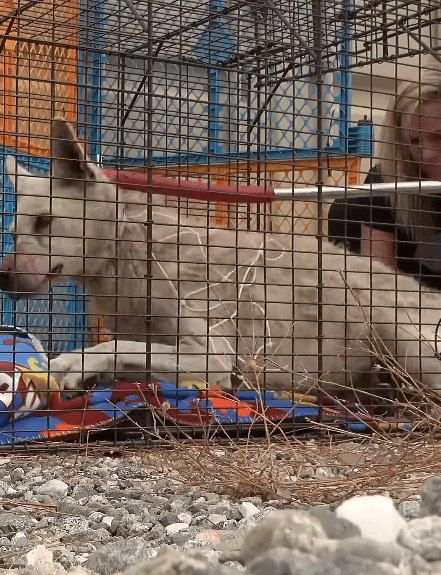
Tonka sits inside his enclosure, no longer wandering between cold metal containers. His eyes still carry confusion, perhaps uncertainty.
But something important has changed.
He is no longer alone in danger.
He is in a place where healing can begin.
The rescue does not promise instant transformation.
It promises time.
And sometimes, time — combined with patience — is the first real gift a frightened animal receives.
Tonka’s journey isn’t finished.
It has only just begun.