Abandoned in the Snow
It was the heart of winter.
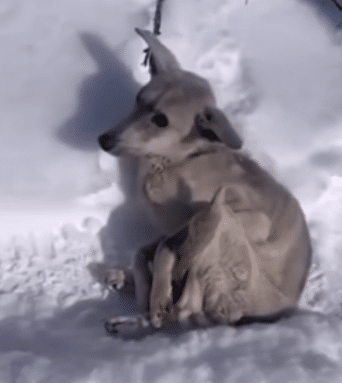
Snow covered the ground in a thick, silent blanket, and the air was so cold it stung to breathe. Curled tightly against the frozen earth lay a skeletal dog named Izya. His body trembled from hunger and exhaustion. He was so weak he could barely lift his head.
He had not wandered there.
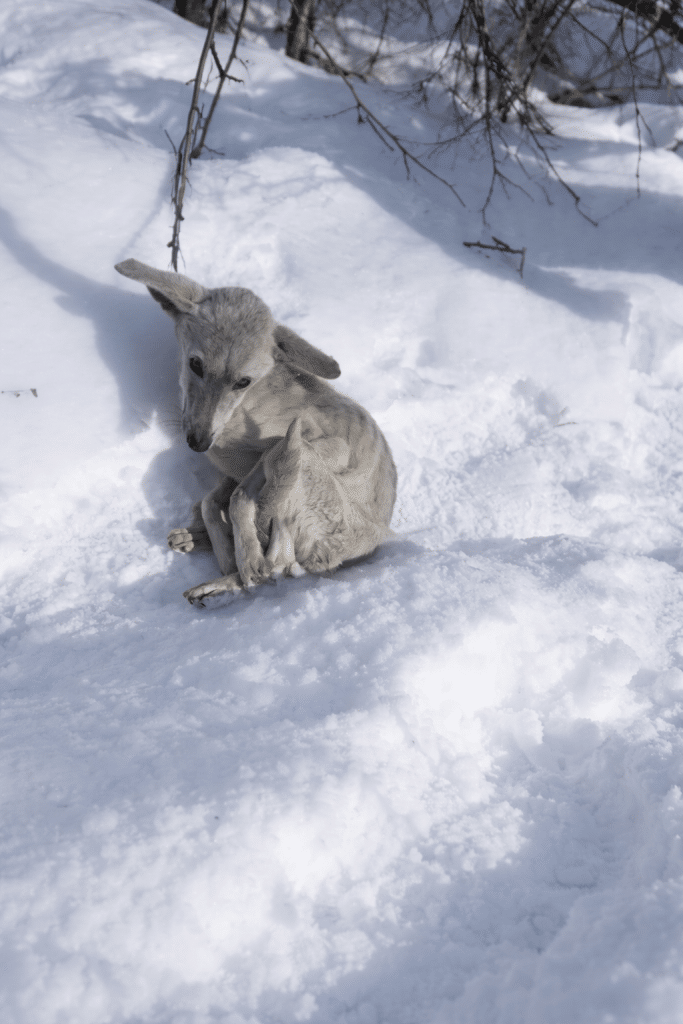
He had been left.
More painful than the cold itself was the indifference that followed. When rescuers arrived, his owner refused to let them take him. He claimed he wanted to “teach the dog a lesson.” Only after negotiation—and payment—did he finally allow Izya to be removed.
As Izya was lifted into the vehicle, the man never once looked back.
But the rescuers did.
A Body on the Brink of Collapse
At the veterinary clinic, the full reality became clear.
Izya was severely malnourished. His ribs pressed sharply against fragile skin. Most of his muscle mass had disappeared. He was dangerously anemic from prolonged starvation. An old injury on his leg had healed improperly, leaving behind a visible scar—a quiet reminder of past hardship.
At night, temperatures had been dropping to -21°C.
For a dog in his condition, survival outdoors would have been nearly impossible.
He had been rescued just in time.
Video: Izya’s Transformation From Frozen and Forgotten to Loved and Safe
But physical survival was only the beginning.
Healing a Body—and a Frightened Heart
The medical team created a careful recovery plan.
His meals were divided into small portions throughout the day to avoid overwhelming his weakened stomach. Probiotics and essential nutrients were added gradually. IV fluids and supportive care helped stabilize his system.
But beyond the medical charts and bloodwork, there was another challenge.
Izya was deeply afraid.
Sudden sounds made him crouch low. During early walks, he would freeze in place, as if expecting something terrible to happen. Even gentle movements sometimes caused him to flinch.
The caregivers moved slowly, patiently. They spoke softly. They allowed him space when he needed it.
Trust cannot be rushed.
Small Signs of Courage
By day sixteen, there was measurable progress. His health indicators improved. His appetite strengthened.
And then, something beautiful happened.
His tail wagged.
Not wildly. Not dramatically.
Just a gentle movement—hesitant, but real.
He began to look at people with curiosity instead of fear. He allowed longer strokes across his back. He lifted his head higher when walking outside.
He was learning that safety could be permanent.
A New Home, A New Chapter
On day fifty, Izya was officially discharged from the clinic.
The journey to his new home was filled with uncertainty. He watched the road carefully, as if wondering whether this, too, might end in abandonment.
But when he arrived, something felt different.
There was a spacious garden waiting for him. Soft bedding. Calm voices. And a family ready to give without expecting anything in return.
At first, he was shy around the household cats. He observed them cautiously from a distance. But with time, even that barrier softened. They became companions, sharing quiet spaces under the same roof.
From Survival to Joy
Izya is no longer the trembling dog in the snow.
He runs across the grass with steady legs. His coat looks healthier each week. His eyes no longer search for danger at every sound.
He is not defined by the cold nights he endured.
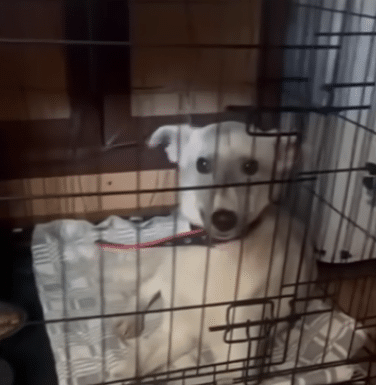
He is defined by the warmth that followed.
From a fragile body left in the snow to a brave boy surrounded by love, Izya’s story reminds us of something simple yet powerful:
Patience heals.
Kindness restores.
And love, given consistently, can rewrite even the most painful beginnings.
For Izya, the winter has passed.