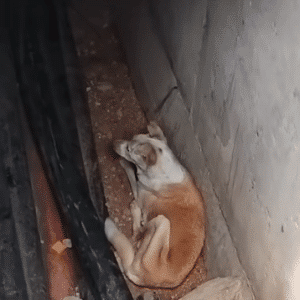
Benki’s story began in silence on a quiet day in Lara, Venezuela, when rescuers came across a small dog who appeared almost frozen in place. He did not run when approached. He did not bark or struggle. Instead, he remained perfectly still, as if movement itself had become something to fear. What they saw was heartbreaking: Benki was blind, missing his right hind leg, and his body carried clear evidence of prolonged neglect and mistreatment.

From the first examination, it was obvious that Benki’s condition was not the result of a single accident. The pattern of injuries told a deeper story—one of repeated harm and abandonment. Veterinary assessments strongly suggested that he had been used in a breeding operation and discarded once he was no longer considered valuable. Despite the severity of what he had endured, X-ray scans revealed something unexpected and hopeful: there was no internal damage. His body was broken on the outside, but his vital systems were still intact, offering a chance for recovery.
While his physical injuries were serious, Benki’s emotional state was equally fragile. Blind and disoriented, he reacted to unfamiliar sounds with panic. His cries were not aggressive, but desperate—calls for reassurance in a world that had suddenly become terrifying and confusing. The first days of care focused less on treatment and more on trust. Caregivers spent long hours beside him, speaking gently, letting him learn their voices, and guiding him slowly through his surroundings so he could begin to understand where he was.
This patient companionship became the foundation of his rehabilitation. Instead of rushing progress, the team allowed Benki to move at his own pace. Sound-based training played a key role in helping him adapt. Caregivers used consistent verbal cues to guide him during feeding, rest, and short walks. After about ten days, a remarkable change occurred—Benki began responding to commands. It was a small milestone, but it marked a turning point in his recovery and showed that he was starting to feel safe again.
As days turned into weeks, Benki’s confidence continued to grow. With careful guidance, he ventured beyond the shelter enclosure for the first time. His movements were slow and cautious, but curiosity began to replace fear. He learned to rely on touch, scent, and sound to navigate his environment. Each step forward, no matter how tentative, represented progress toward independence.
Video Benki — abandoned, mutilated and blinded, yet regaining hope
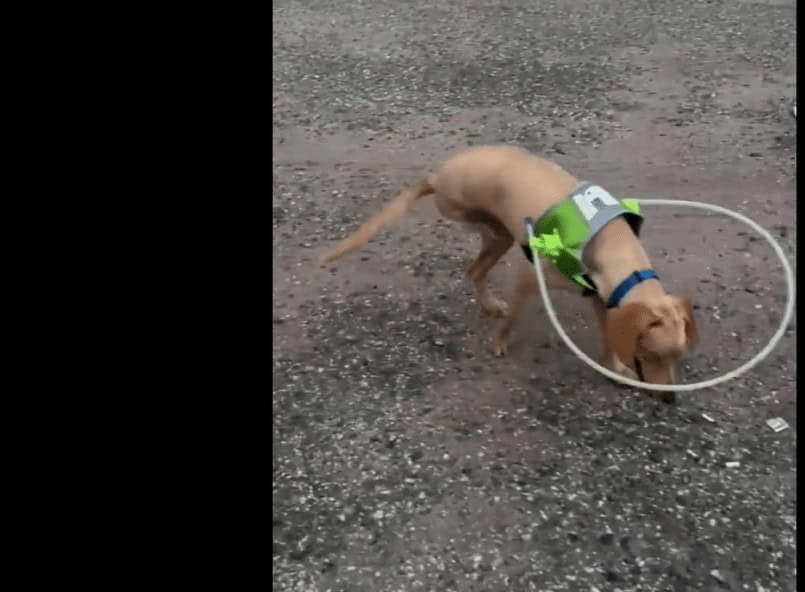
To help him feel more secure, Benki was fitted with protective eyewear designed for visually impaired dogs. While simple, this addition made a noticeable difference. It gave him confidence to explore without fear of bumping into obstacles, and it allowed him to move more freely. These thoughtful adjustments supported both his physical safety and emotional comfort.
Life at the shelter required ongoing attention. Because of his limited mobility, Benki initially gained weight. Instead of restricting him, caregivers introduced activities tailored to his abilities. Short stair exercises, guided walks in controlled spaces, and gentle play sessions helped strengthen his muscles and improve coordination. These activities also gave him mental stimulation, encouraging engagement rather than withdrawal.
What stood out most to everyone involved was Benki’s resilience. Despite everything he had endured, he showed an incredible capacity to adapt. Each small success—a confident step, a calm response to a voice, a relaxed posture while resting—was proof that healing was taking place. The dog who once seemed overwhelmed by fear began seeking human contact, leaning into gentle touch and responding with quiet affection.
Benki’s journey revealed how deeply kindness can transform a life. He had once been treated as disposable, valued only for what he could provide. Yet with consistent care, patience, and compassion, he rediscovered joy and trust. His personality emerged gradually, revealing a gentle and affectionate companion who simply wanted to feel safe.
Today, Benki is ready for the next chapter of his life. He is searching for a permanent home where he will receive continued care, understanding, and unconditional love. While his needs are unique, his ability to connect and forgive is extraordinary. He has shown that even after severe trauma, animals can rebuild trust when given the chance.
Benki’s story serves as a powerful reminder of responsibility—both individual and collective. It highlights the importance of recognizing and responding to animal neglect, and it demonstrates what can be achieved through dedicated rehabilitation. His progress proves that physical limitations do not define worth, and that healing extends far beyond medical treatment.

Now safe and surrounded by care, Benki stands as a symbol of hope. His journey from abandonment to adoption readiness reflects the profound impact of empathy and commitment. For anyone considering adoption, dogs like Benki offer something rare: a quiet strength, a deep appreciation for kindness, and a heart ready to return love many times over.