Violet’s journey is not the kind of story filled with dramatic rescues or instant transformations. There were no flashing lights or urgent chases. Instead, her story unfolded quietly, shaped by patience, consistency, and the slow return of something she had never truly known—joy.
When Violet was first discovered, she was still young, but her body and behavior reflected a life lived without freedom. At just around two years old, she carried visible signs of long-term neglect. A dark mark around her neck told a silent but powerful story, suggesting she had spent much of her life tethered, restrained, and waiting. Waiting for attention. Waiting for relief. Waiting for something to change.
For Violet, life had been defined by stillness.
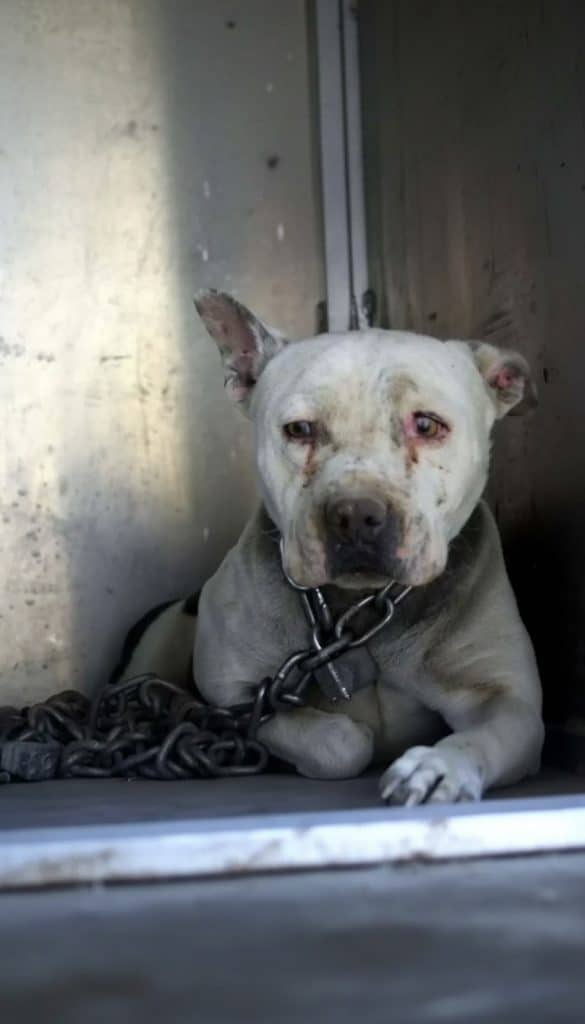
She had likely never known the comfort of a soft place to sleep or the excitement of a walk. Human affection, something most dogs crave, was foreign to her. Her days had passed without stimulation, without choice, and without the warmth of connection. It wasn’t that Violet lacked the ability to love or trust—it was that she had never been given the opportunity.
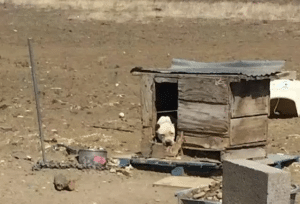
Her situation came to light in Miguel County, New Mexico, when a concerned passerby noticed Violet and several other dogs on the same property. All were tethered, left without adequate supervision or care. Something about the scene didn’t feel right. That moment of awareness made all the difference.
Help arrived.
Local authorities and animal welfare advocates stepped in quickly, removing the dogs from the property and placing them in protective care. For Violet, it was the first step away from confinement and toward a future that felt uncertain—but hopeful.
Once she was safe, the full impact of her past became clear. Violet was physically uncomfortable and emotionally guarded. She startled easily, avoided close contact, and watched every movement around her with caution. The people caring for her understood that trust wouldn’t come easily. It would have to be earned, one gentle moment at a time.
Video From Overlooked to Opening Up: Violet’s Gentle Path Toward Trust, Play, and a Place to Call Home
Veterinary care helped address her physical needs. With proper nutrition, treatment, and rest, her body began to recover. But healing the body was only one part of the journey. The deeper work involved helping Violet feel secure—teaching her that she was no longer at risk, that her space was respected, and that kindness was not temporary.
The rescue team moved slowly and deliberately. There were no raised voices or rushed interactions. Routine became a source of comfort. Each day followed a predictable rhythm, helping Violet learn that nothing bad would happen if she relaxed. Gradually, her posture softened. She lingered closer to the people around her. She began to observe rather than retreat.
Progress showed up in quiet ways.
At first, Violet explored cautiously. A single step forward. A brief sniff of a new object. A pause to assess her surroundings before deciding it was safe to continue. Over time, those moments became habits. She discovered soft blankets and warm corners. She learned the pleasure of resting without fear, of closing her eyes knowing she wouldn’t be startled awake.
Then came a moment that might seem small—but meant everything to her.
Violet was given her very first toy.
It was a small squeaky raccoon, soft and light, designed for play. At first, she didn’t know what to do with it. She nudged it gently, stepped back, and looked around, as if checking whether this new experience was allowed. Slowly, curiosity replaced hesitation. She squeaked it once, startled by the sound, then tried again.
Play had entered her life.
That toy became more than just an object. It represented everything Violet had missed and everything she was finally gaining. She carried it with her, squeaked it carefully, and occasionally tossed it into the air before pouncing with surprise at her own bravery. Sometimes, she would pause mid-play and glance around, quietly seeking reassurance. And every time, she was met with encouragement.
With each passing day, Violet’s personality began to emerge. She learned to enjoy short walks, discovering the feeling of movement and choice. The outdoors, once a place of restraint, became a source of curiosity. Gentle voices no longer made her flinch. Instead, they brought comfort. She began offering moments of affection—small but meaningful signs of connection.
Violet still carries reminders of her past. Sudden changes can make her hesitant, and new situations take time. But she is learning. She is growing. And she is proving that resilience doesn’t always announce itself loudly. Sometimes, it shows up quietly, in the willingness to try again.
Those who care for Violet believe she is just beginning to experience what her early life should have been—safe, playful, and full of discovery. Once her remaining medical needs are addressed, she is expected to be ready for adoption. What Violet needs most is not perfection, but patience.

She would thrive in a calm home with gentle guidance and understanding. A place where trust can continue to grow naturally, without pressure. A family that sees her not as a project, but as a companion—a dog who has already overcome so much and is still learning what it means to belong.
Violet has come a long way. From a forgotten dog tethered in isolation, she has become one who plays with her favorite squeaky toy and curls up comfortably at the end of the day.
Her story is a reminder that healing doesn’t always happen all at once. Sometimes, it unfolds in quiet moments—through kind hands, soft blankets, and a small toy that squeaks.
And for Violet, those moments are opening the door to a future filled with warmth, safety, and the love she has always deserved.