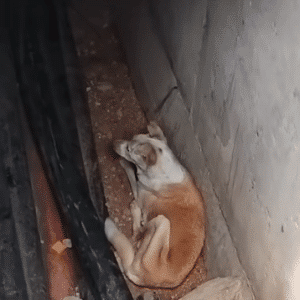
At first glance, it didn’t look unusual. A small puppy lay quietly near the edge of a busy road, a leash still clipped to his collar. To passing drivers and pedestrians, it was easy to assume he belonged to someone nearby. Maybe he had slipped away for a moment. Maybe his owner was just out of sight.
But Latte wasn’t waiting.
He was frozen.
For nearly two days, the tiny puppy remained in the same spot, his body pressed low to the ground, head down, barely moving. Cars rushed past close enough to stir the air around him. Voices came and went. Footsteps echoed, then faded. Latte didn’t bark. He didn’t whimper. He didn’t try to follow anyone.
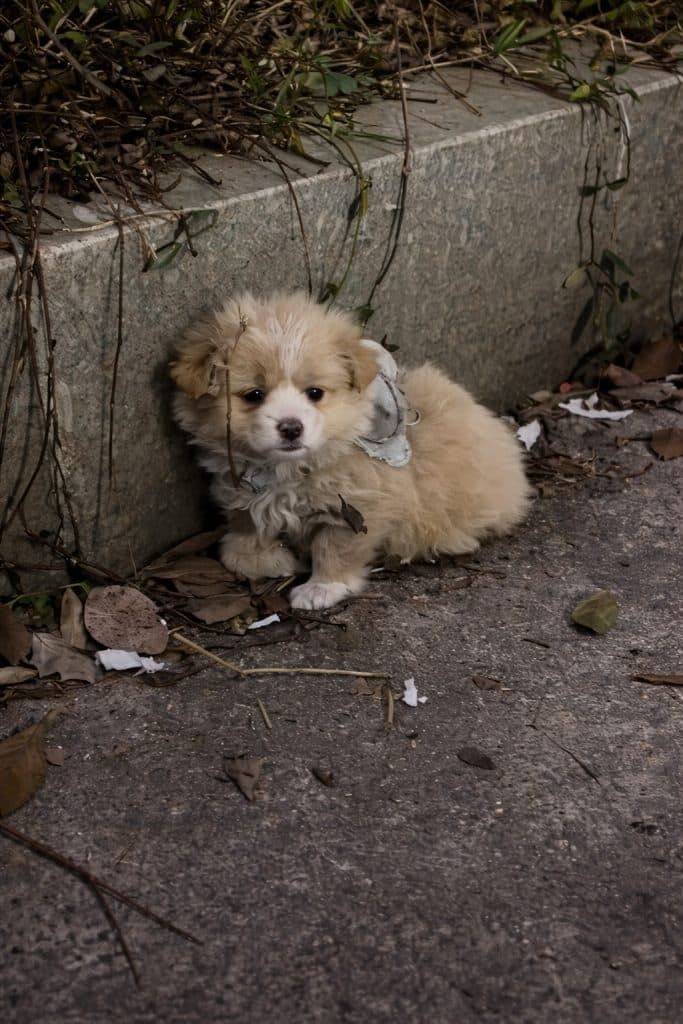
He stayed still.
That stillness was not calm. It was fear.
Young puppies don’t wander far from where they’re left. They don’t understand how to find food or safety on their own. When fear overwhelms them, many don’t cry for help the way people expect. Instead, they shut down. They conserve energy. They become quiet, hoping danger will pass if they don’t move.
That’s exactly what Latte did.
A passerby noticed him first—lying beside the road, leash attached, eyes dull and uncertain. Something about the scene didn’t feel right. Still, it took two more days before a local resident posted about him in a community chat, asking if anyone knew where he belonged.
That message reached a young woman who couldn’t ignore it.
She decided to go see the puppy for herself.
When she approached, the truth became painfully clear. Latte panicked. He scrambled under a parked car, trembling so hard his small body knocked against the gravel. His tail tucked tightly. His legs shook. He wasn’t lost.
He was terrified.
Many people don’t realize that silence can be one of the strongest signs of distress in animals. Puppies experiencing extreme fear often freeze rather than flee or cry out. They shrink into themselves, hoping to disappear. Latte’s quiet behavior wasn’t obedience or patience—it was survival.
VIDEO A Leash, a Roadside, and a Puppy Who Didn’t Move: How Latte’s Life Changed Because One Person Stopped
The woman didn’t rush him.
She crouched low, kept her voice soft, and waited.
Minutes passed. Latte stayed hidden, watching every movement, every sound. Slowly, inch by inch, he crawled out from beneath the car. His legs wobbled as he stood. He didn’t pull against her when she reached for him. He allowed himself to be lifted, as if he had finally run out of strength to be afraid.
For the first time in days, Latte felt warmth.
That moment split his life in two: the world before he was seen, and the world after.
He was taken straight to a veterinary clinic, where the urgency became clear. Latte was barely over a month old—around 40 days. Tests revealed he was positive for canine coronavirus, a highly contagious intestinal illness that can be dangerous for puppies. Dehydration, weakness, and digestive distress can escalate quickly at that age.
Time mattered.
Despite his condition, Latte kept fighting. During the exam, he even had an accident right on the vet’s table—messy, unexpected, and strangely hopeful. It meant his system was still functioning. His body hadn’t given up.
Neither had the woman who rescued him.
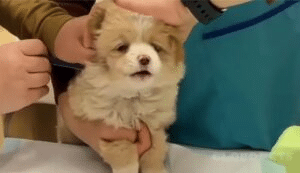
Once released from the clinic, Latte went home with her, where recovery became a full-time commitment. He was treated like a newborn. His food was soaked in goat milk to protect his fragile stomach. He was wrapped in warm clothes when temperatures dropped. Meals were small but frequent. Hydration was constant. Noise was kept low. Stress was avoided.
Slowly, his body responded.
At first, he only nibbled.
Then he ate.
Then he stood with more confidence.
Days passed, and the changes became undeniable. Latte’s eyes grew brighter. His tail lifted. One afternoon, he surprised everyone by wagging it. Not much—but enough.
As his health stabilized, something even more important happened.
His personality returned.
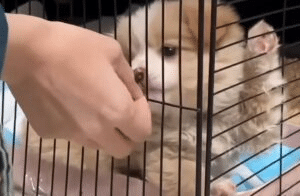
The puppy who once lay motionless by the roadside became curious and expressive. He barked at phone sounds. He followed his rescuer from room to room. He learned to sit, shake, and spin. He explored the yard like it was the greatest place on earth. At night, he slept deeply, curled up warm and safe—no longer listening for danger.
His healing wasn’t just physical.
It was emotional.
Safety gave Latte permission to be a puppy again.
Months later, Latte barely resembled the frightened dog under the car. He gained weight. He received his vaccinations. His coat grew soft and healthy. His movements were confident. His eyes, once dull and guarded, now sparkled with curiosity and trust.
Most importantly, he had something he never had on that roadside.
A home.
A family.
A childhood he almost never experienced.
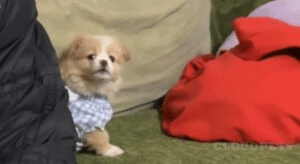
Latte’s story matters because it reminds us of something easy to miss: not all animals in distress cry out. Some go silent. Some freeze. Some lie still with a leash on, hoping someone will notice that “waiting” is actually fear.
His life didn’t change because he was lucky.
It changed because one person stopped, looked closer, and chose compassion over assumption.
And sometimes, that choice is all it takes to save a life.