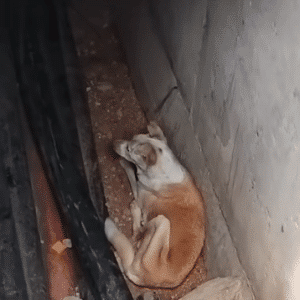
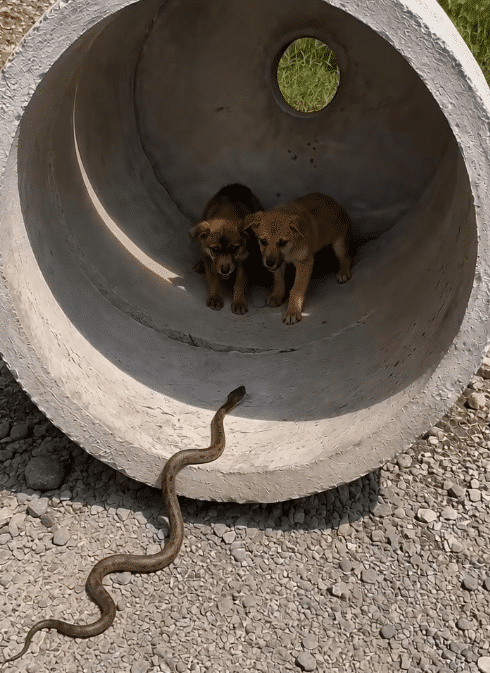
When Hannibal was first brought to safety, it was clear that time was running out. He was just a puppy, far too young to have endured so much, yet his small body showed the unmistakable signs of prolonged neglect. He was weak, exhausted, and dangerously ill. Every breath seemed to take effort, and his condition made it painfully obvious that without immediate intervention, he might not survive another night.
Those who rescued Hannibal understood the gravity of the situation instantly. Severe anemia had left his body depleted, struggling to deliver enough oxygen to vital organs. His gums were pale, his movements minimal, and his energy nearly gone. This was not a case that could wait. Emergency care was the only option, and every minute mattered.
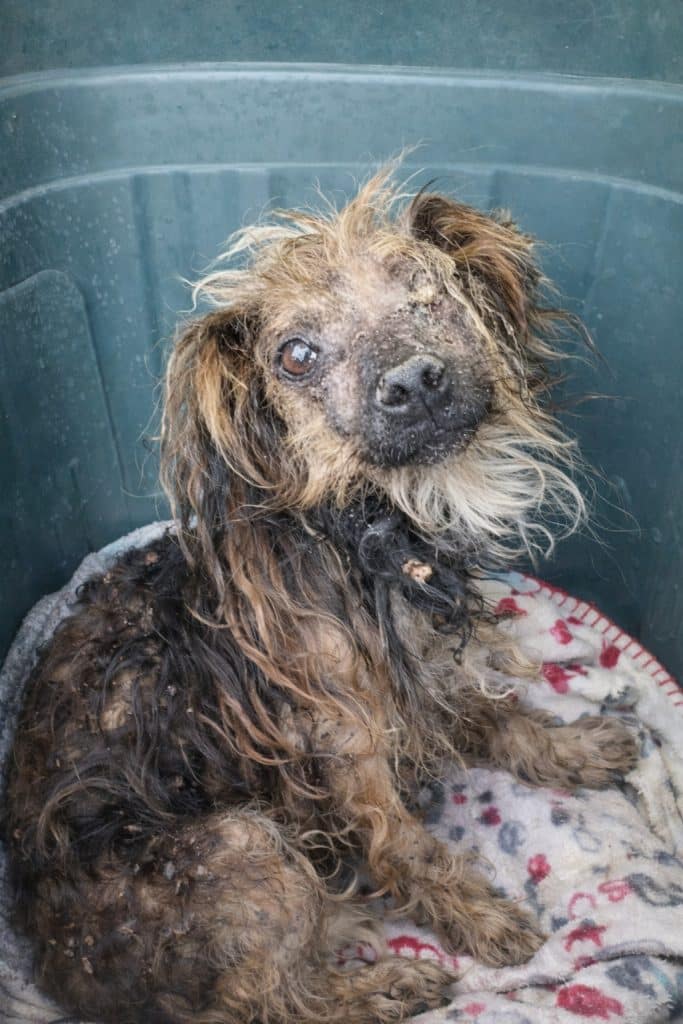
Hannibal was rushed to a specialized veterinary hospital where an experienced medical team prepared to do everything possible to save him. The decision was made quickly: he needed an emergency blood transfusion. Without it, his chances were slim. The procedure was carried out with precision and urgency, giving Hannibal the support his body desperately needed to keep going.
That single intervention marked a turning point. It didn’t solve everything, but it gave Hannibal something priceless—time. Time for his body to stabilize. Time for doctors to understand the full extent of the damage. And time for hope to replace fear.
Following the transfusion, Hannibal was placed under intensive care. Around the clock, he was monitored closely by veterinary professionals who refused to leave anything to chance. His heart rate, breathing, and blood levels were checked repeatedly. Every small change was noted. Recovery, if it came, would be gradual and carefully managed.
One of the biggest concerns was whether the severe anemia had caused lasting harm to Hannibal’s internal organs. To find answers, the team performed detailed diagnostic imaging while he was under anesthesia. These tests were critical. In cases like Hannibal’s, prolonged oxygen deprivation can sometimes affect organs such as the liver and kidneys, leading to complications that are not always immediately visible.
VIDEO Hannibal’s Fight for Life: How One Puppy’s Will and Timely Care Changed His Fate
The results brought cautious relief. The imaging showed that Hannibal’s liver and kidneys were functioning properly. Despite everything his body had been through, these vital organs appeared unaffected. For everyone involved in his care, this news felt like a small victory—proof that Hannibal’s body still had the strength to heal.
That said, the road ahead remained uncertain. Doctors explained that Hannibal might require another blood transfusion depending on how his body responded in the coming days. Anemia doesn’t disappear overnight, and rebuilding healthy blood levels takes time, nutrition, and careful support. Still, the most dangerous moment had passed. Hannibal was no longer on the brink—he was moving forward.
What stood out most during his early recovery was Hannibal’s resilience. Even while weak, he showed signs of awareness and responsiveness. He reacted to gentle voices. He rested more peacefully. He accepted care without fear. These small behaviors spoke volumes about his will to live.
As days passed, subtle improvements continued. Hannibal began showing more interest in his surroundings. His posture relaxed slightly. His eyes, once dull with exhaustion, started to brighten. Though still fragile, he was no longer fading. He was fighting back, supported by a team determined to see him through.
The hospital staff made it clear that Hannibal’s care would not stop with emergency treatment alone. Their goal was not just survival, but recovery—ensuring that he would one day grow into a healthy, happy puppy. This meant a comprehensive plan that included nutrition, monitoring, follow-up testing, and gradual rebuilding of strength.
Equally important was the emotional aspect of Hannibal’s healing. Puppies who experience neglect often carry fear and uncertainty, even after their bodies begin to recover. The staff approached him with patience and consistency, understanding that trust is part of medicine too. Calm routines, gentle handling, and a stable environment all played a role in helping Hannibal feel safe.
Hannibal’s journey is a powerful reminder of how fragile life can be—and how quickly it can change when someone steps in at the right moment. Without rescue and immediate medical attention, his story would likely have ended quietly and tragically. Instead, it became a story of intervention, expertise, and compassion working together.
Today, Hannibal remains under close care, but his outlook is hopeful. He has a path forward—one shaped by professional dedication and the belief that every life, no matter how small or fragile, deserves a chance. His recovery is not yet complete, but his progress so far has shown what is possible when neglect is met with action rather than indifference.
Stories like Hannibal’s matter because they shine a light on animals who suffer silently. They remind us that neglect often hides in plain sight, and that rescue efforts depend on awareness, education, and the willingness to act. Sharing these journeys helps others recognize the importance of timely care and responsible treatment of animals.
Hannibal didn’t choose the conditions that left him so ill. But he is choosing, every day, to keep going. With continued care, patience, and support, he now has the chance to grow beyond his painful start and experience the life every puppy deserves.
His fight is not over—but thanks to emergency care and compassionate hands, it is no longer a fight he faces alone.