For twelve long years, Gazelle’s world never changed.
A short chain kept him anchored to the same small patch of ground, day after day, season after season. He grew up without knowing what freedom felt like, without ever stepping beyond the narrow limits set around him. The earth beneath his paws wore thin and bare. There was no shelter from heat or cold, no comfort, and no kindness. This was the only life Gazelle had ever known.
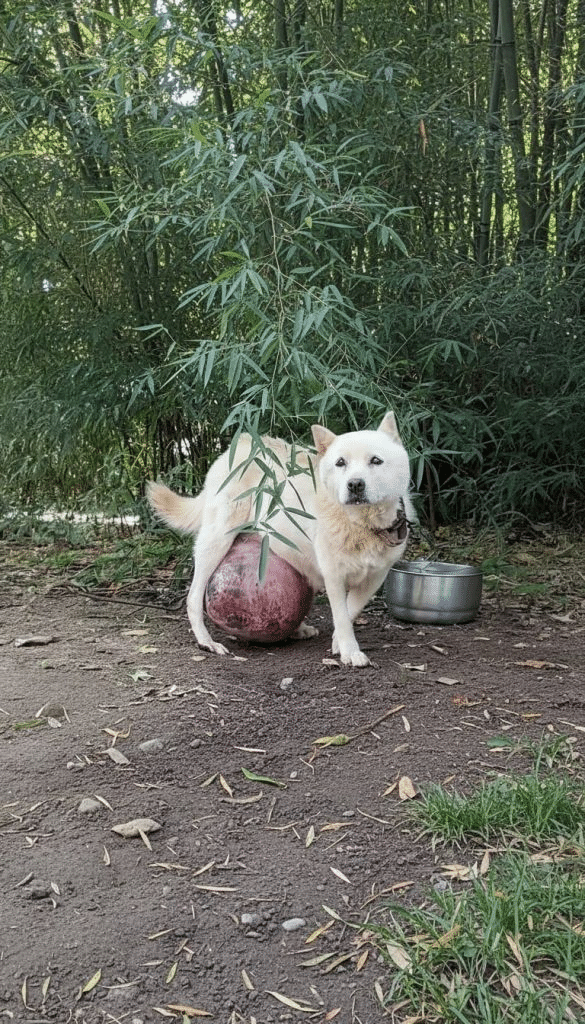
Time passed quietly. Summers came with relentless heat. Winters arrived without protection. Food appeared irregularly, just enough to survive. Medical care never came at all. Gazelle adapted because he had to. He learned to conserve energy, to endure discomfort, and to exist without expectation.
Then, slowly, another burden appeared.
A growth began forming on his lower abdomen. At first, it was small. Easy to overlook. But it didn’t stop growing. Over time, it altered the way Gazelle stood and moved. Walking became painful. Standing strained his body. Even lying down offered little relief. Still, nothing around him changed.
Gazelle had never known that another life was possible.
Isolation shaped his behavior. He watched the world cautiously, barking at unfamiliar movement, not out of aggression but fear. Years of being alone had taught him that strangers brought uncertainty, not help. His world had offered no reason to trust.
Video: Twelve Years of Waiting, One Moment of Mercy: Gazelle’s Journey Into a Life Without Chains
When rescuers finally arrived, the reality was impossible to ignore. The chain was far too short. The conditions were deeply neglectful. The growth required immediate medical attention. This was not a situation that could wait any longer.
Earning Gazelle’s trust was the first and most delicate step. Rescuers moved slowly, speaking calmly, giving him time to understand what was happening. Every motion was deliberate. Gazelle watched closely, unsure whether this moment would bring harm or relief.
Then, quietly, something changed.
The tension in his body softened just enough to allow help. That fragile moment marked the first time Gazelle accepted human care without resistance. The chain was removed, and he was gently placed into a crate—leaving behind the only space he had ever known.
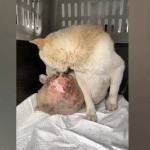
At the veterinary clinic, examinations confirmed how urgent his condition was. Surgery was necessary, and delay was not an option. While preparations were made, rescue workers documented Gazelle’s situation and notified authorities to ensure accountability for the years he had endured.
The surgery itself was complex and required patience and skill. Those waiting understood how much depended on its success. For Gazelle, this was more than a medical procedure—it was the doorway to a life he had never experienced.
When the surgery was complete, relief came quietly. The growth was successfully removed. As Gazelle woke from anesthesia, his breathing steadied. His body, no longer burdened by constant pain, began to relax for the first time.
Recovery was slow, but steady. Gazelle was surrounded by people who saw him not as a problem, but as a life worthy of care. Gentle hands replaced restraint. Calm voices replaced silence. Each day brought small improvements—rest without discomfort, movement without strain.
His transformation wasn’t immediate, but it was profound.
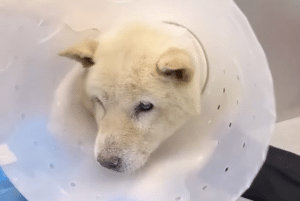
Freed from chains and pain, Gazelle began learning what safety felt like. Trust came gradually, built through routine, patience, and consistency. For the first time, his future was no longer defined by confinement.
Gazelle’s story is a reminder that even after years of neglect, healing is still possible. Compassion may arrive late—but when it does, it can change everything. Today, Gazelle’s life is no longer measured by the length of a chain, but by the dignity, care, and quiet hope of a future finally lived without limits.