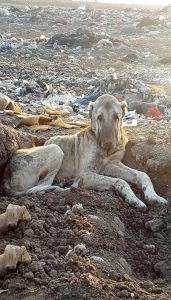
On a cold October morning near the outskirts of Çorum, Turkey, a landfill lay silent beneath a gray sky. Among broken ground and scattered debris, a large dog rested motionless, his body curled inward as if trying to conserve the last of his strength. At first glance, he was easy to overlook—another discarded presence in a place meant to forget what no longer serves a purpose.
But he was alive.
The Quiet Cost of Loyalty
The dog would later be named Kratos, an eight-year-old Kangal Shepherd whose life had slowly unraveled after years of loyalty to people who ultimately left him behind. Once built for strength and endurance, his body now showed the toll of neglect. He was dangerously underweight, severely dehydrated, and covered in painful sores that had stripped away patches of his thick coat. Every movement appeared exhausting, as if even standing demanded more energy than he had left.
Eyes That Told the Whole Story
Kratos’ eyes revealed more than his injuries ever could. There was no anger in them. No fear. Only a quiet resignation, the look of a dog who had stopped expecting help to arrive. Kangal Shepherds are known for their calm confidence and deep bonds with humans, and it was clear Kratos had once lived that life. Age had slowed him, and with that, his value had been taken away.
VIDEO: From Forgotten to Finding Hope — Kratos the Kangal Shepherd’s Journey Toward Healing
When Someone Finally Stopped
Volunteers from Rescuers Without Borders were the ones who found him, lying in a shallow pit, barely able to lift his head. As one rescuer knelt beside him and spoke softly, Kratos responded with the smallest movement of his eyes. It was subtle, but unmistakable. Even after everything, he still recognized kindness.
Being removed from the landfill was only the beginning. Kratos’ condition required careful, patient care. Veterinarians focused first on stabilizing him—fluids to address dehydration, warmth to protect his weakened body, and small, frequent meals to slowly rebuild strength. His skin was treated gently, and his recovery was monitored closely, knowing that pushing too fast could do more harm than good.
Healing Measured in Small Victories
Progress did not come quickly. At first, it showed itself in quiet ways: a steadier breath, a stronger appetite, a slightly firmer stance. Over time, his eyes grew brighter. He began responding more clearly to voices and touch. Soft fur slowly returned where inflamed skin once showed. Each improvement, no matter how small, felt like a quiet triumph for everyone involved.
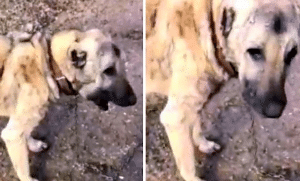
A Life That Still Believes in Kindness
What makes Kratos’ journey especially powerful is not only that he survived—but that he still trusts. He accepts gentle hands. He rests peacefully, knowing he is safe for now. His caregivers believe that with continued care, he has a real chance at recovery and the possibility of a home where he will be valued again.
Kratos’ past cannot be erased, but it no longer defines him. He is no longer a forgotten figure in a landfill. He is a living reminder that dignity does not disappear with age, and that compassion—when it arrives in time—can restore more than just the body. It can give a life its meaning back.