A Body That Could No Longer Carry Him
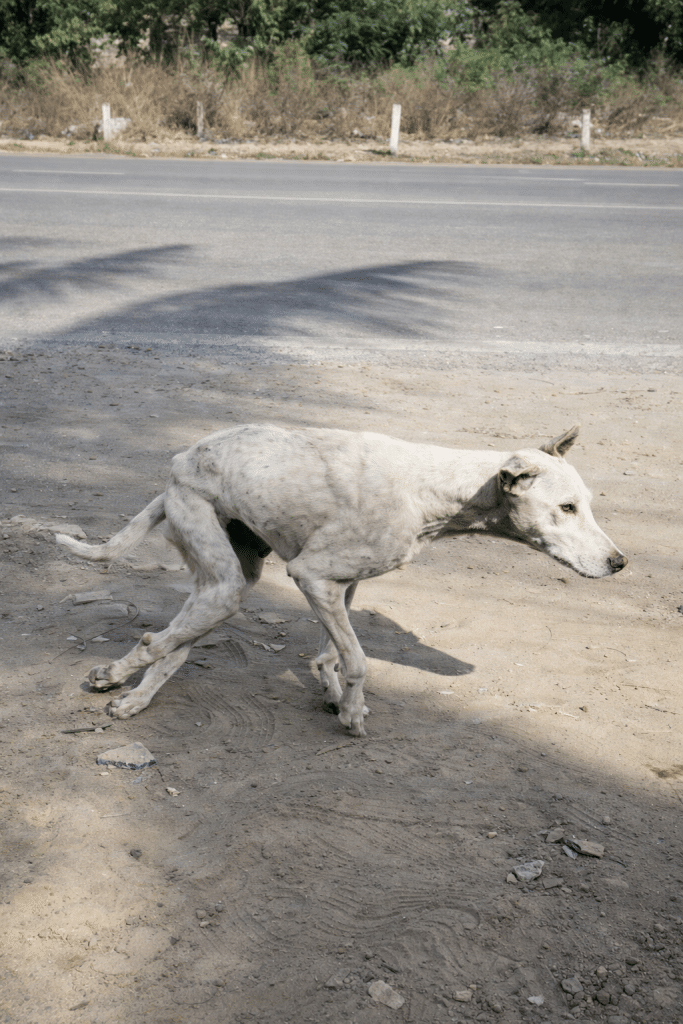
He was a white dog with small black spots.
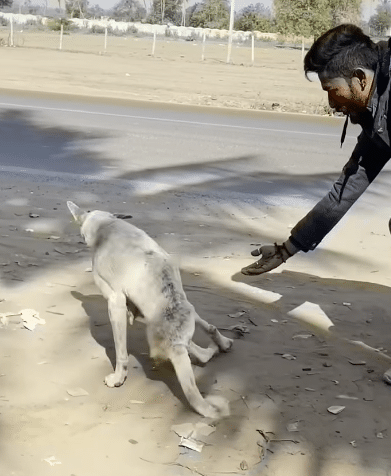
Once, he may have run easily. Once, he may have trusted without hesitation. But when rescuers first saw him, he was dragging his body across the pavement, his back legs motionless behind him.
An accident—no one knows exactly when or how—had left him paralyzed in his hind limbs.
To move, he had to pull himself forward using only his front legs. Each effort scraped his body against the ground. Each day outside made survival harder.
Yet he endured.
For months, he survived alone.
When Pain Turns Into Fear
Living on the streets while unable to walk normally changes a dog.
He could not escape quickly. He could not defend himself easily. Every sound felt like a threat. Every approaching footstep could mean danger.
Over time, something shifted inside him.
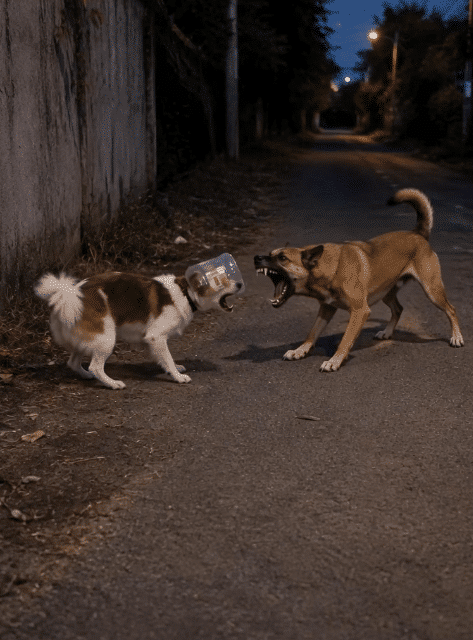
The gentle dog he may once have been became guarded, defensive. When people tried to approach, he snarled. He barked sharply. He bared his teeth—not out of cruelty, but out of fear.
Fear of being hurt again.
Fear of being helpless.
To those who didn’t know his story, he looked aggressive.
But underneath the noise was a dog who had simply learned that survival meant pushing everyone away.
A Call for Help
Local residents contacted RRSA—Relief and Rehabilitation of Stray Animals—after noticing his condition.
The team arrived prepared, knowing this would not be a simple approach. They understood that a frightened dog in pain can react unpredictably.
Video: The First Night He Slept Without Fear
They did not rush toward him.
They observed. They waited. They assessed his body language.
He growled, warning them to stay back.
But they had come to help.
A Rescue Built on Caution
For everyone’s safety—including his—the team used a humane catch pole with a soft loop to secure him from a safe distance. It was not about control for its own sake; it was about preventing injury during transport.
He resisted at first, frightened and confused.
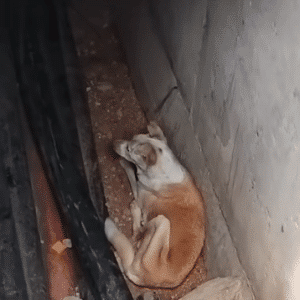
But within moments, he was gently guided into the rescue vehicle. The door closed softly behind him.
For the first time in months, he was no longer alone on the roadside.
He was on his way somewhere safer.
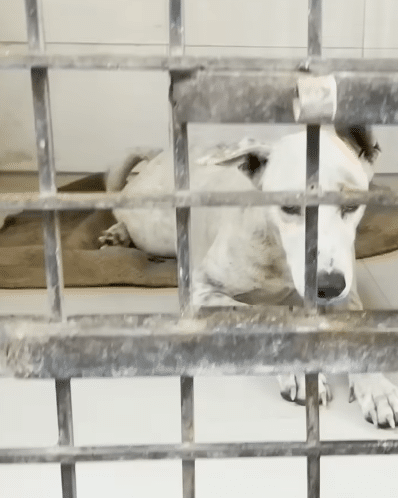
At the RRSA shelter, he was given his own quiet space.
A clean, warm mat. Fresh water. Food placed nearby without pressure. No rushing hands. No loud noises.
He remained cautious, watching from the corner of his area. His eyes followed every movement. Trust does not return overnight.
But something had already changed.
He was protected now.
No speeding cars. No harsh weather. No need to drag himself across rough pavement in search of scraps.
Just rest.
And for a dog who had not truly rested in months, that was everything.
The Beginning of Healing
Recovery for him will be both physical and emotional.
His paralysis requires careful management and long-term care. He may need assistive support to move comfortably. But beyond the medical needs lies something equally important—patience.
Each day, caregivers approach him calmly. They speak softly. They give him space to choose when to come closer.
Some days he still growls.
Some days he simply watches.
But slowly, the tension in his body eases.
Fear takes time to unlearn.
A Second Chance at Dignity
He may never walk on all four legs again.
But he will no longer have to drag himself alone through dangerous streets.
At RRSA, he has safety. He has warmth. He has people who understand that aggression is often a shield built from pain.
Behind every defensive bark was a story of survival.
And now, behind the guarded eyes, there is a chance for something new.
If this story moved you, remember that sometimes the dogs who seem the hardest to approach are the ones who have suffered the most.
Find out what happened next in the first comment below.