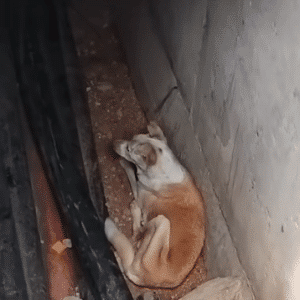
Barry’s story does not begin on the streets.
It begins behind a house.
Once a family dog, Barry developed a medical condition that went untreated for too long. As his health declined, he began losing sensation in parts of his body. Eventually, he could no longer control basic bodily functions.
Instead of receiving care, he was tied in the backyard.
The reason was simple — he was considered “messy.”
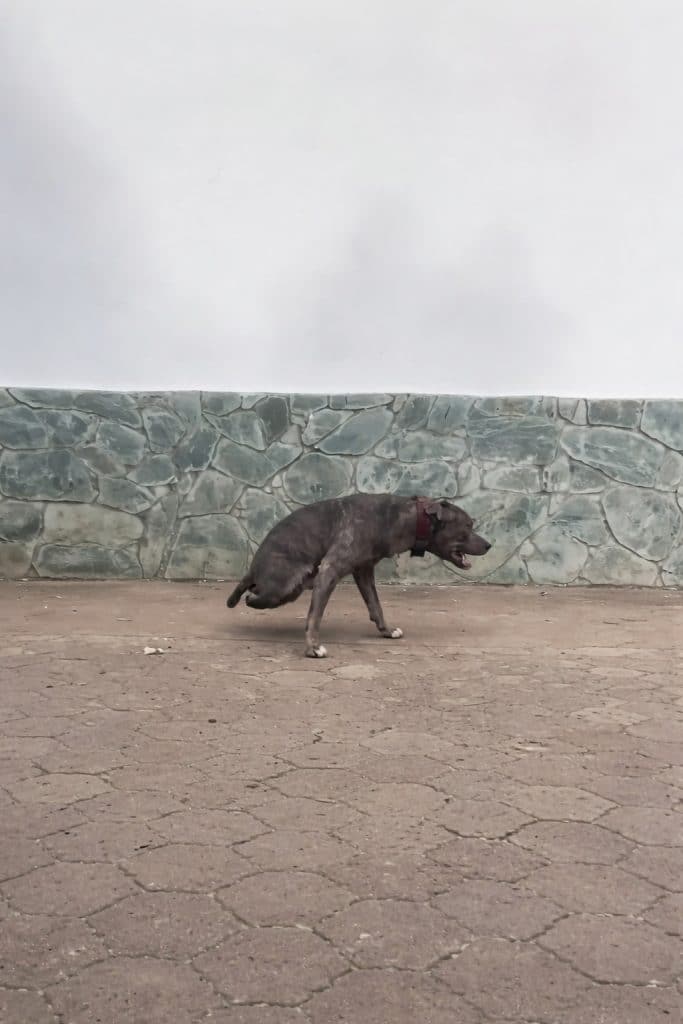
In the opening images, Barry looks painfully thin. His body trembles when he tries to move. Standing is difficult. His eyes reflect exhaustion more than anything else.
He was not aggressive.
Not destructive.
Just sick.
And alone.
A Body That Needed Help, Not Isolation
As time passed without treatment, Barry’s condition worsened.
He became largely immobile. Without medical support, his muscles weakened further. The lack of sensation left him vulnerable. Each day made recovery more uncertain.
But what hurt just as deeply as the illness was the isolation.
Being tied up was not a solution.
It was abandonment in plain sight.
Video: From a Backyard Chain to a Second Chance — Barry’s Road to Dignity
Still, Barry endured.
And then something changed.
The People Who Refused to Look Away
David and Melissa learned about Barry’s situation and made a decision.
They would not let him stay there.
They saw beyond the fragile body and difficult symptoms. They saw a living being still deserving of comfort, safety, and respect.
Barry was untied.
He was lifted gently.
And his journey toward treatment began.
There were no promises of instant recovery.
Only commitment.
Healing Measured in Small Victories
Rehabilitation was slow.
Loss of sensation and weakness meant every movement required effort. Therapy sessions were careful and repetitive. Supportive equipment helped him relearn how to balance and shift his weight.
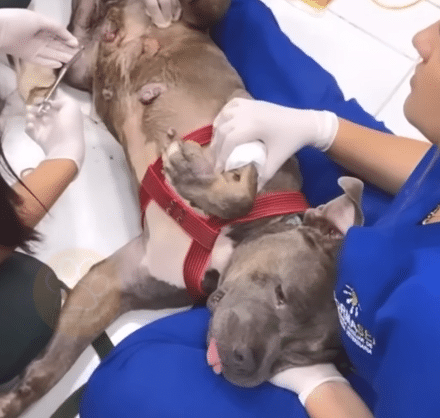
There were setbacks.
Moments of fatigue.
Days that tested patience.
But David and Melissa stayed.
They celebrated the smallest improvements — a steadier posture, a stronger step, a moment of alertness that hadn’t been there before.
Barry began adjusting.
Adapting.
Responding.
Not because it was easy.
But because someone believed he could.
More Than Physical Recovery
Barry’s transformation is not only medical.
It is emotional.
The dog once tied in isolation now rests indoors, surrounded by care. He is spoken to softly. Touched gently. Treated with dignity.
His story reminds us that illness does not reduce worth.
That inconvenience is not a justification for neglect.
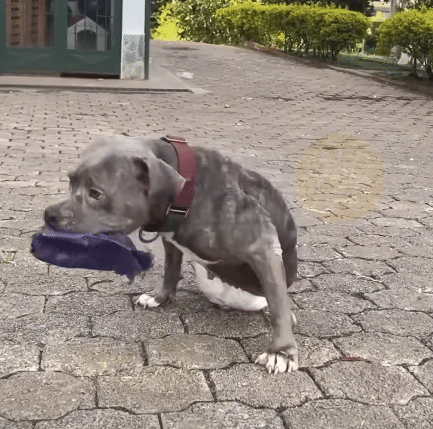
And that compassion often begins where patience meets responsibility.
Barry’s recovery continues.
But what has already changed is profound:
He is no longer a problem to be managed.
He is a life being valued.
And sometimes, that shift alone is the beginning of hope.