The rain was heavy that afternoon.
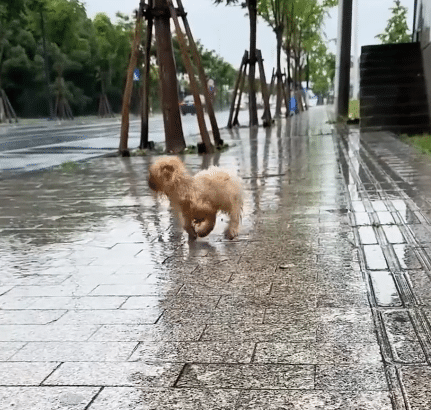
Near a roadside bush, a small dog limped through the mud, drenched and trembling. His fur was so matted and dirty that it was hard to tell what breed he was. His front right leg dragged awkwardly, forcing him to hop unevenly as he searched for shelter.
Close by, there was a cardboard box.
Inside it: a teddy bear and a handful of dog food.
The message was painfully clear.
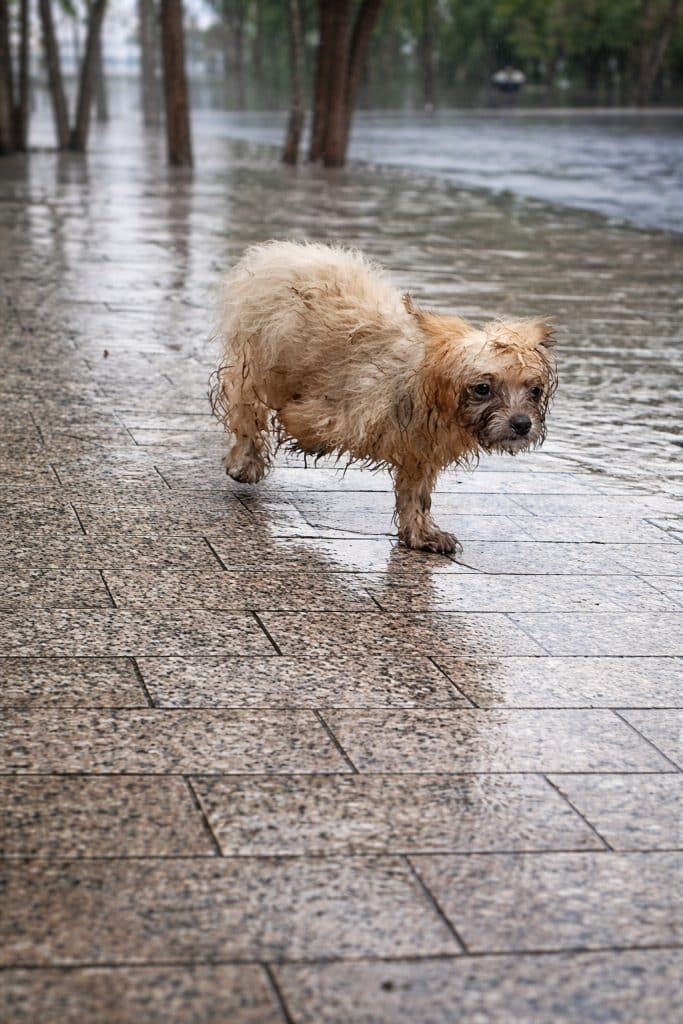
Someone had left him there — not by accident, but by decision.
The puppy crawled toward the box, dragging his weakened leg, desperate enough to push himself inside just to reach the food.
That was when the young man decided he couldn’t walk away.
He lifted the soaked little body into his car and drove home.
A Diagnosis No One Expected
At home, the puppy shook violently at the sound of the hair dryer. His fear ran deeper than the cold. Concerned by his weakness, the young man brought him to the veterinary clinic.
The X-ray revealed something surprising.
The leg wasn’t broken.
It was a congenital deformity — part of the bone had never developed.
But the harder news came from the blood test.
The puppy tested positive for canine coronavirus.
It wasn’t severe yet — no vomiting or heavy diarrhea — but it was contagious and dangerous. He would need antiviral medication and strict isolation.
The young man already had a Poodle named Mantou at home.
Now he had a new responsibility.
Video: From a Rain-Soaked Box to Running Freely on Grass — YoYo’s New Beginning
He named the puppy YoYo.
Isolation, Disinfection, and Patience
The house was disinfected thoroughly.
Mantou was confined to the bedroom.
YoYo was isolated in a separate area.
Mantou protested loudly, clearly unhappy about the new arrangement. Jealousy showed in small ways — barking, scratching at doors — but safety had to come first.
YoYo, meanwhile, was severely malnourished.
The young man cooked meat and prepared specialized milk formula for him. YoYo devoured every bowl, as if unsure when the next meal would come.
Emotionally, he was fragile.
He clung to his rescuer constantly. When left alone, he scratched at doors and tried to jump — risky behavior given the weakness in his legs.
Recognizing this anxiety, the young man adjusted the space, giving YoYo more room and comfort. Slowly, the frantic scratching stopped.
Trust doesn’t grow through confinement alone.
It grows through understanding.
The Day the Test Turned Negative
After weeks of careful treatment and follow-up visits, the result finally came.
YoYo tested negative.
The isolation ended.
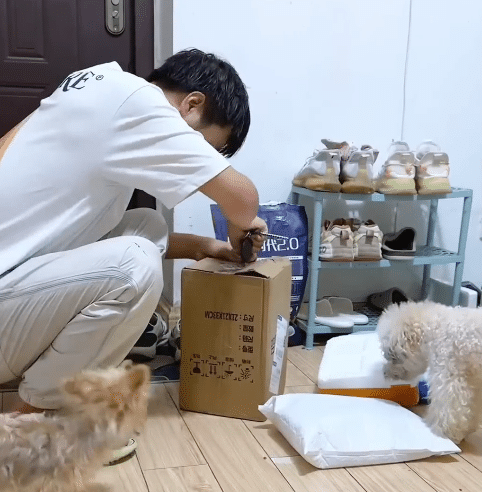
For the first time, Mantou and YoYo met freely on the bed. There were moments of mild jealousy — Mantou occasionally pushing for attention — but overall, the transition was gentle.
With more space and companionship, YoYo changed quickly.
He began playing with toys.
He stopped panicking when his owner left for work.
He moved with surprising agility despite his leg difference.
His disability did not define him.
It simply shaped how he moved.
A Routine Built on Love
The young man worked full-time, but he structured his days around his dogs.
He woke at 4:20 a.m. to walk them before the neighborhood stirred.
He purchased an automatic feeder to ensure they were never hungry.
Meals included fish oil and calcium supplements.
Even when they chewed up items and scattered things across the floor, he responded with gentle scolding — never anger.
Sometimes he even tied a tiny topknot in YoYo’s fur, laughing at how adorable he looked.
It wasn’t grand gestures.
It was daily consistency.
From Abandonment to Belonging
The final scenes show YoYo running across open grass, sitting proudly on his owner’s motorbike, sleeping peacefully indoors.
The puppy once left in the rain beside a cardboard box now has:
A name.
A routine.
A family.
He no longer drags himself toward scraps in a muddy bush.
He runs toward morning walks.
YoYo’s story is not about a perfect body.
It’s about a patient heart.
Because sometimes, what changes a life is not surgery or medicine alone.
It’s someone deciding that a flaw is not a reason to leave.