A Video That Shattered the Night
The first call came about a tiny puppy with severe neurological symptoms.
They sent a video.
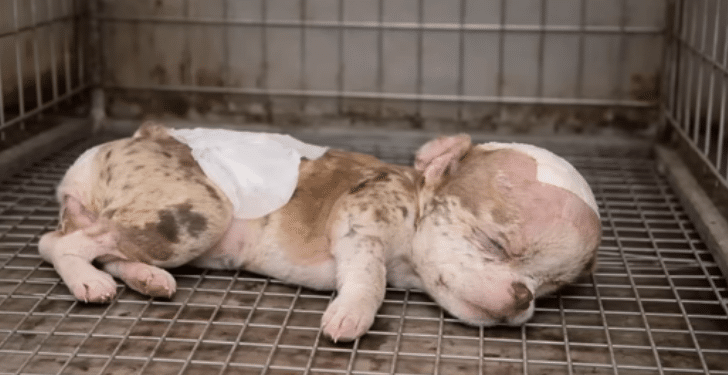
Her fragile body was thrashing against the cold metal grate of a kennel. No blanket. No bedding. No comfort. Just a small puppy struggling to control movements she didn’t understand.
I couldn’t look away.
I offered to take her immediately.
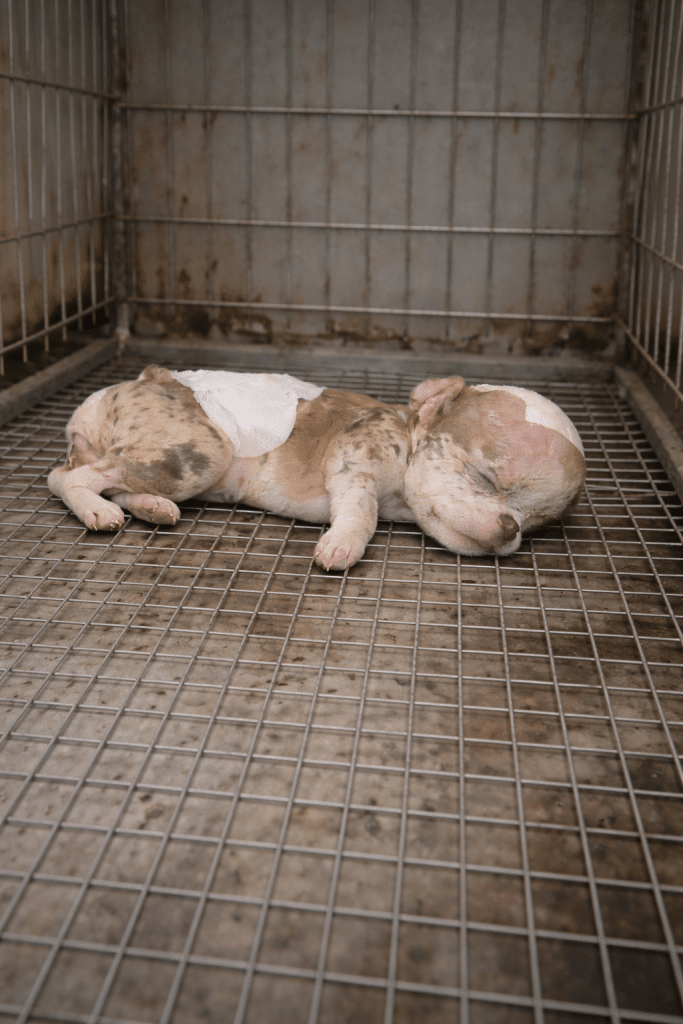
But that night, they refused to surrender her.
Sleep didn’t come. I kept picturing her alone on that metal floor, her body unable to rest, her mind overwhelmed. I prayed they would change their minds.
The next day, the phone rang again.
“Can you take her?”
Relief washed over me — mixed with heartbreak that help had been delayed even one more night.
Critical Condition From the Start
When she arrived at the hospital, the tests revealed the seriousness of her condition.
She was hypoglycemic.
She was dehydrated.
And doctors suspected hydrocephalus — a buildup of fluid in the brain.
Medication began immediately to stabilize her and reduce the pressure.
Midway through the night, something extraordinary happened.
She latched onto a bottle and drank eagerly, as if she had been waiting her whole life to feed herself. She had previously been syringe-fed, but clearly she wanted independence.
She couldn’t stand.
She was severely off-balance.
Her vision appeared limited, though she reacted faintly to light.
But she was alert.
She wanted to move.
She wanted to live.
Video: Tippy’s First Days — From Thrashing in Pain to Learning to Stand
This was when hope truly began.
A Name for a Fighter
We named her Tippy — the perfect name for her wobbly little steps.
In our home, we braced her gently for hours each day, helping her feel stillness and safety for the first time. I often wondered what her first five weeks of life had been like — so much movement, so little comfort.
At her neurology consult, the specialists instantly adored her. They suspected both hydrocephalus and a congenital cerebellar abnormality, possibly cerebellar hypoplasia or abiotrophy. She was too small and unstable for anesthesia to confirm through advanced imaging.
But the medications were working.
She was eating enthusiastically.
She was playing.
She woke each morning eager for the day.
We hoped stability would continue until she was big enough for further testing.
An Unexpected Setback
Then, without warning, Tippy began crying out when she moved her neck.
We tried pain medication. Steroids. Muscle relaxants.
Nothing lasted.
Because of her cerebellar condition, she couldn’t control her head movements, which made the discomfort worse. She was hospitalized on a pain drip.
Then came her first seizures — small but alarming.
We needed answers.
A CT scan confirmed hydrocephalus, a very small cerebellum, and a cyst. There was fluid along her spine as well. To understand if pressure was the main cause, doctors performed a tap through her open fontanel.
Normal brain pressure is around 15.
Tippy’s was 33.
They reduced it to 24.
Almost immediately, she improved.
But we knew this relief would only be temporary.
Worth Every Effort
To some, her case might seem overwhelming.
To us, she was worth everything.
Devin built her a tiny pink custom cart so she could remain upright. For a short time, she rolled proudly outside, ears lifted, tail wagging in the breeze.
Then the fluid began to build again.
She was rushed back to the hospital. A shunt — small enough for her size — had to be specially ordered. She remained hospitalized until surgery.
Through every setback, she kept eating.
She kept wagging.
She kept fighting.
Surgery and a New Chapter
Tippy underwent shunt placement surgery.
Two incisions — one on her head, one on her abdomen. The procedure allowed excess fluid to drain and regulate pressure.
She was kept sedated afterward to manage pain and allow her body to adjust.
The shunt is working.
She is stable.
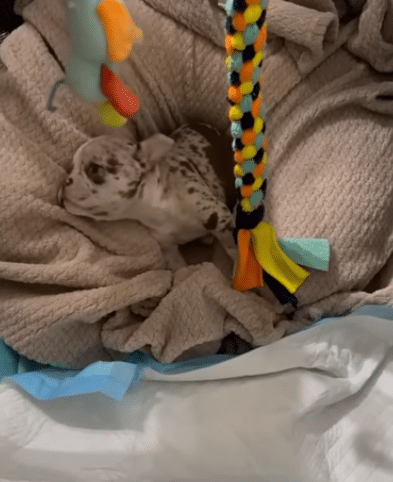
She is moving in the right direction.
A Future Filled With Possibility
The road ahead will not be simple. She will require monitoring. She may always have balance challenges. There may be more appointments, more sleepless nights.
But she has already overcome so much.
When I close my eyes, I picture her in that pink cart again — ears perked, tail swaying, determined to explore the world in her own way.
She didn’t ask to be born with these challenges.
Yet she greets each day with joy.
Tippy reminds us that some lives require extraordinary commitment — and that commitment is always worth it.
Love and determination changed her path.
And because of that, a puppy who once lay thrashing on cold metal now has warmth, stability, and a future filled with hope.