A Shocking Discovery Among the Trash
It began like any other day at the landfill.
A waste collector noticed a white sack shifting slightly among the piles of discarded debris. At first, she thought it might be something trapped accidentally.
But when the bag was opened, the truth was far worse.
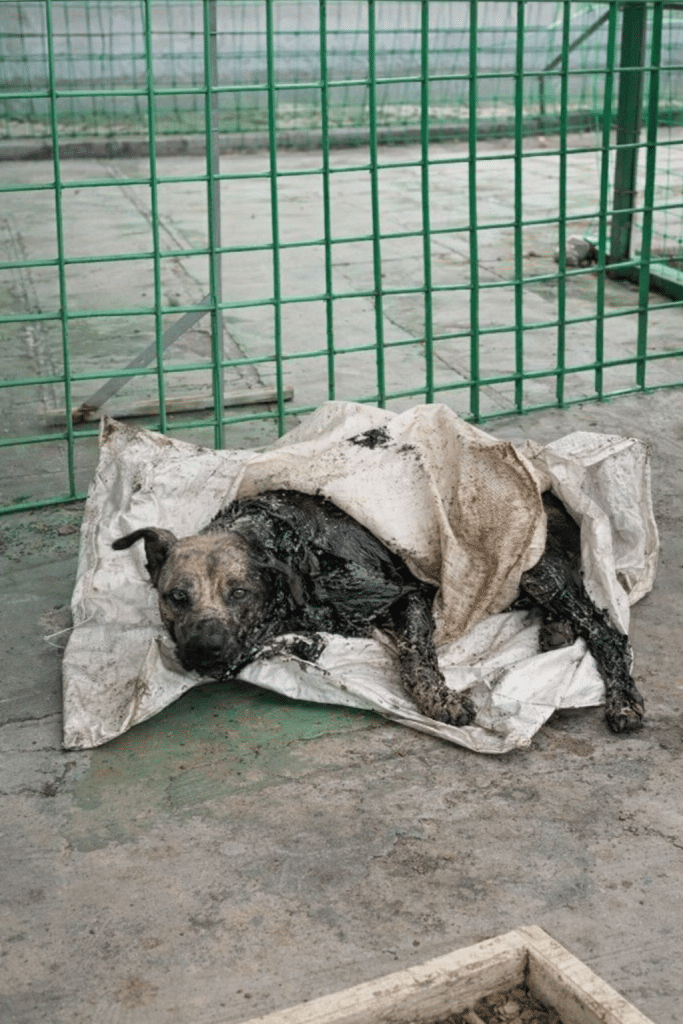
Inside was a dog—tightly bound, her body covered in a thick layer of hardened black asphalt. Whoever had done this had tied her up and sealed her inside the sack, hoping no one would ever see.
Yet somehow, she was still alive.
The First Fragile Minutes of Rescue
Her breathing was shallow. Weak. Every small touch made her whimper.
The asphalt had hardened against her fur and skin, fusing the sack to her body. Rescuers worked carefully for over thirty minutes just to cut the material away without causing further harm.
When they finally freed her from the bag, her chest rose and fell unevenly. She struggled to breathe.
Time was critical.
She wasn’t just trapped in tar—she was trapped in pain.
She would later be known as Lucinda.
But first, there was a long road ahead.
A Long, Patient Process of Removal
Back at the medical station, the team knew they could not rush.
Video: From Asphalt to Sunshine—Lucinda’s Incredible Journey
If left untreated, asphalt can cause severe skin damage and toxic reactions. Working in shifts, the rescuers gently applied vegetable oil, mineral oil, warm water, and specialized cleansers to soften the hardened layers.
They worked inch by inch.
Hour after hour.
As the black coating slowly dissolved, raw red skin emerged beneath—swollen, irritated, and extremely sensitive.
She endured it quietly.
Three other rescued dogs had arrived that same day, but Lucinda required nearly constant attention.
An Unexpected Setback
In the middle of treatment, she developed a high fever.
The team paused the cleaning process to stabilize her first. Cooling care, medication, and careful monitoring became the priority. Every two hours, oil-soaked bandages were wrapped around remaining patches of asphalt to soften them gradually—minimizing additional pain.
Even while feverish and exhausted, she continued eating small portions when offered.
It was a quiet sign of determination.
She was not ready to give up.
Fighting Infection, One Day at a Time
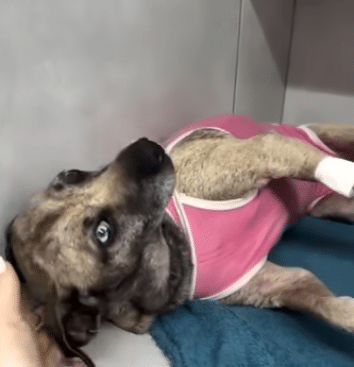
Two days later, the fever broke. Nearly 99% of the asphalt had been removed.
But blood tests revealed elevated infection markers and a significant increase in white blood cells. Her body was still battling internally.
She required close daily observation.
Slowly, steadily, her strength began to return.
A Remarkable Transformation
About two weeks later, the change was undeniable.
Lucinda began relaxing when caregivers approached. She leaned gently into their hands during soft strokes. The fear in her eyes gradually softened.
And then there were her eyes themselves—striking and unforgettable.
One blue.
One brown.
They seemed to hold both her past and her future at once.
The team attempted to investigate who had abandoned her, but there were no cameras nearby. No leads. No answers.
Only the present moment—and the opportunity to move forward.
A Home Filled With Sunlight
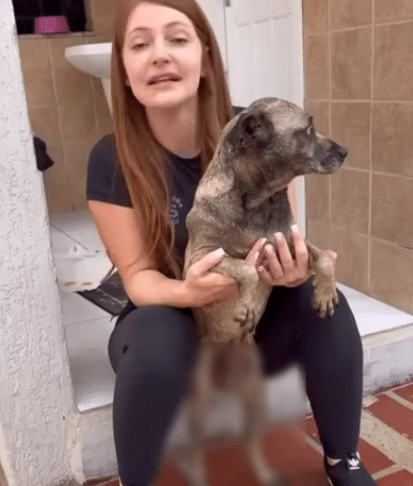
In the end, the person who helped save her could not imagine letting her go.
Lucinda was adopted into the rescuer’s own home.
Today, she lives peacefully alongside other dogs, running freely in a sunny garden. Her coat is clean and soft. Her body is healthy. Her tail lifts high when she moves.
The landfill is behind her.
The sack is behind her.
The asphalt is behind her.
What remains is resilience.
Saving one dog may not erase cruelty from the world. But for Lucinda, her world has been transformed—filled now with warmth, safety, and love.
And sometimes, that is the greatest victory of all.