Some wounds don’t show on the surface.
They live quietly, carried in memory, shaped by years of silence.
Grace’s story began far from comfort, in a place hidden from the public eye. For most of her life, she existed in isolation inside an illegal breeding operation in São Paulo, Brazil. It was a world where dogs were valued only for what they could produce, not for who they were. There was little sunlight, little freedom, and no sense of safety. Days blended into one another, defined by confinement and exhaustion rather than care.
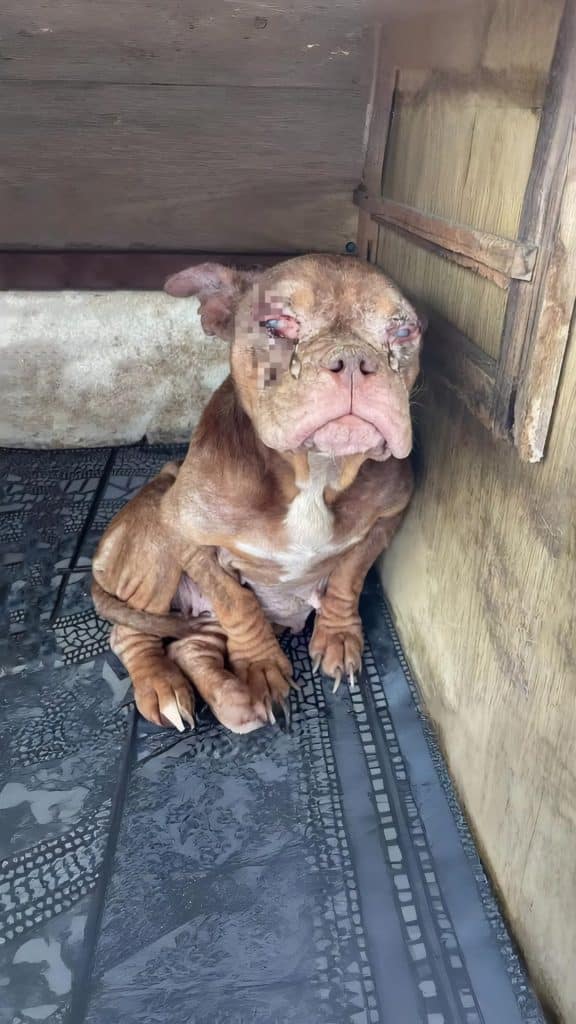
Grace endured it all without protest.
Despite her gentle nature, her body was repeatedly pushed beyond its limits. Each cycle brought physical strain and emotional confusion. And each time, hope quietly slipped away. Over the years, she lost every litter she carried. There were no comforting hands, no reassurance, no chance to understand what had happened. Only loss — repeated, unresolved, and deeply internalized.
When authorities finally shut down the operation, rescuers entered expecting fear or aggression.
What they found instead was something else entirely.
Grace stood quietly in the corner, her body frail, her movements slow. Yet when rescuers approached, she didn’t pull away. She didn’t bare her teeth or retreat in panic. Instead, she leaned forward just enough to offer a gentle nuzzle — a small gesture that revealed a spirit still capable of trust, even after everything she had endured.
It was a moment no one forgot.
Grace was transported immediately to a veterinary facility, where her care began not with urgency, but with patience. The team understood that recovery for a dog like Grace would not be about speed. It would be about stability, routine, and rebuilding a sense of safety that had never existed before.
Video After Years of Loss, She Heard Puppy Cries — And Something Inside Her Finally Healed
Her physical condition reflected years of neglect. She was weak, undernourished, and required ongoing treatment to support her health. But what struck caregivers most was how quietly she accepted help. She allowed examinations. She rested when guided. She responded to calm voices as if they carried meaning.
During her initial evaluations, veterinarians made a difficult discovery: Grace was carrying a pregnancy that had already ended. The room grew heavy with emotion — not from shock, but from understanding what that meant. It wasn’t just a medical finding. It was another chapter in a long history of loss.
Yet Grace didn’t shut down.
Instead, she continued responding to care with gentle openness.
One rescuer, in particular, chose to remain by her side throughout those early days. He spoke softly, moved slowly, and never rushed her. He sat nearby without expectation, allowing Grace to decide when she wanted connection. Over time, she began to respond. Her tail wagged — cautiously at first — then more freely. Her eyes softened. She leaned into his presence as if learning, perhaps for the first time, that consistency could exist without harm.
That bond became her anchor.
As weeks passed, Grace’s body began to strengthen. Her coat grew healthier. Her posture relaxed. Though her vision remained limited, her awareness sharpened. She recognized familiar footsteps. She turned toward voices she trusted. Each small response marked a step forward — not dramatic, but deeply meaningful.
Then came a moment that changed everything.
One afternoon, Grace heard the sound of puppies nearby.
The reaction was immediate and unmistakable.
She lifted her head sharply, ears alert. A soft sound escaped her throat — not fear, not distress, but emotion. Those gentle cries awakened something buried deep within her. Caregivers watched as Grace leaned forward, visibly affected. Her breathing changed. Her body trembled slightly.
It wasn’t confusion.
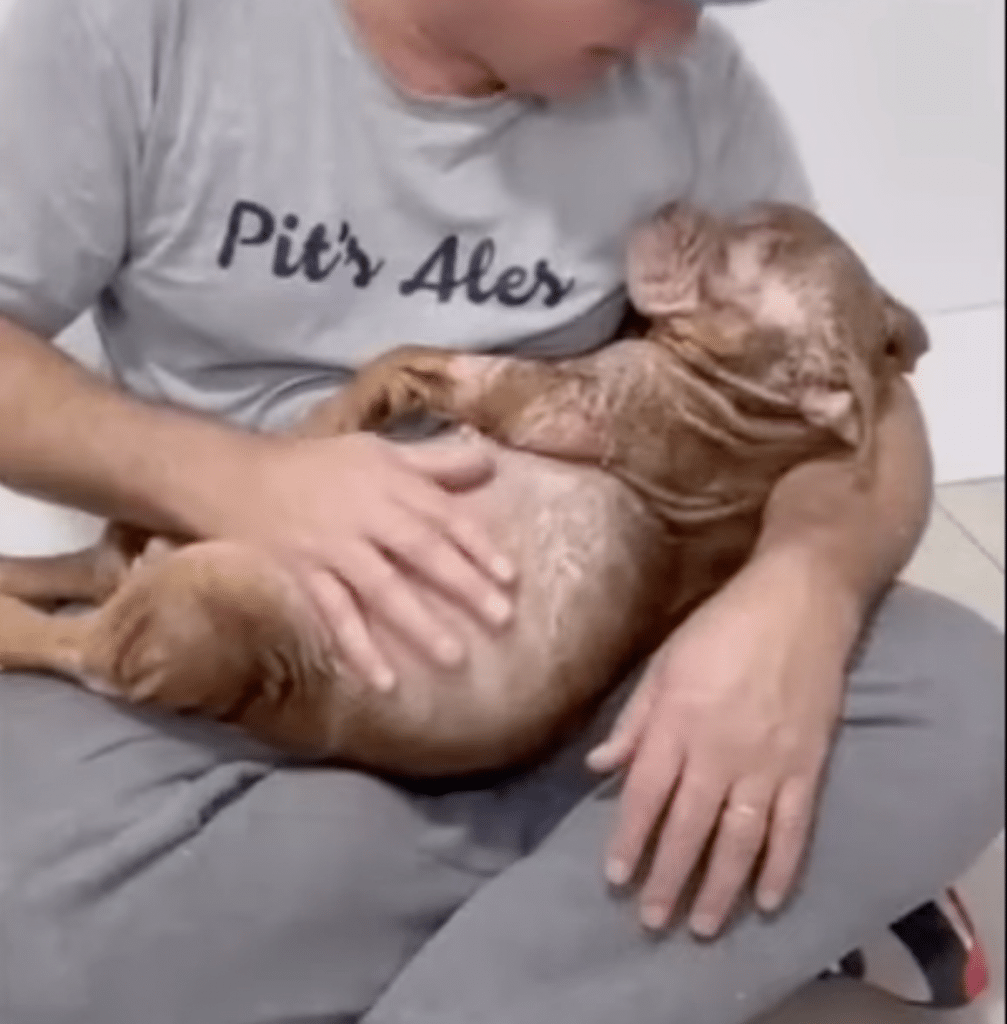
It was recognition.
For years, Grace had carried motherhood without fulfillment — instinct without reward. Hearing those sounds brought grief and longing to the surface, but it also did something else. It opened a door. It allowed her to feel again.
Rather than shutting down, Grace stayed present.
The team understood the significance of that moment. It wasn’t about the puppies themselves. It was about Grace reconnecting with a part of herself that had been suppressed for survival. That day marked a turning point — not just in her emotional recovery, but in her trust of the world around her.
When Grace was finally well enough to leave the clinic, she was welcomed into Pits’ Alex, a shelter known for caring for dogs with difficult pasts. There, Grace encountered something entirely new: choice.
She could rest where she felt comfortable. She could move freely. She could play — or simply observe. No one demanded anything from her. Care was offered, not imposed.
Slowly, Grace flourished.
Sunlit afternoons replaced dark enclosures. Soft bedding replaced cold floors. Gentle companionship replaced isolation. She learned what it meant to exist without expectation — to be valued simply for being present.
Those who now care for Grace describe her as affectionate, calm, and quietly brave. She approaches people with soft curiosity, leaning into touch when she feels safe. Her tail wag is unhurried, sincere. She doesn’t carry resentment. She carries resilience.
Grace’s journey is not about erasing the past.
It’s about acknowledging it — and choosing a different future.
Her story reminds us that healing doesn’t always look dramatic. Sometimes it looks like a dog resting peacefully in the sun. Sometimes it sounds like a soft sigh of relief. And sometimes, it begins with the courage to feel again after years of loss.
Today, Grace lives surrounded by care, dignity, and patience. She is no longer defined by what she endured, but by the quiet strength she carries forward. In her presence, people are reminded that compassion matters — and that even the most broken beginnings can lead to meaningful, hopeful endings.
Grace didn’t lose her ability to love.
She simply waited for someone to show her how safe it could be.