For a long time, Potchie’s world was painfully small.
It was made up of cold air, silence, and the unrelenting weight of a chain. Days blended into nights, and seasons passed without meaning. Somewhere along the way, this gentle Chow Chow stopped expecting anything different. He didn’t know what he had done wrong, only that warmth, comfort, and companionship never came back.
Potchie wasn’t born into cruelty. But neglect became his reality.
Left outdoors for years, he endured harsh weather and long stretches of isolation. The chain around his neck dictated how far he could move and how much of the world he was allowed to see. With no shelter and no consistent care, his body slowly began to fail him. Hunger weakened his muscles. Exposure damaged his skin. Loneliness wore down his spirit.
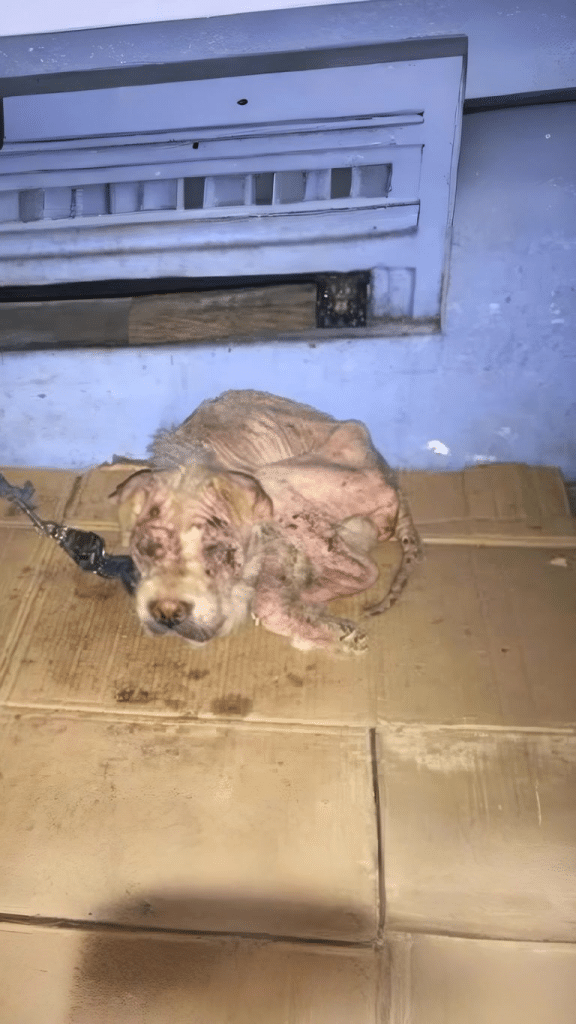
By the time help finally arrived, Potchie was barely holding on.
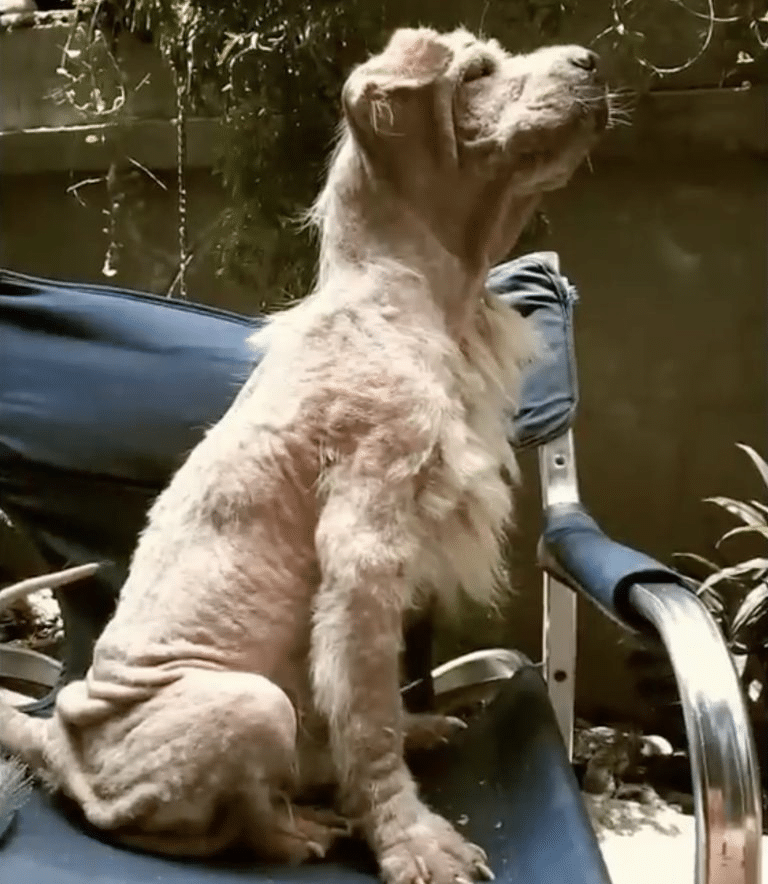
His once-thick coat had thinned dramatically, leaving patches of irritated skin exposed and inflamed. Large areas were completely bare, the result of untreated skin conditions and long-term neglect. His eyes were swollen and painful, clouded by infection and exhaustion. Standing was no longer easy—his legs trembled under his own weight, weakened by malnutrition and lack of movement.
Yet through it all, Potchie made no sound.
He didn’t bark.
He didn’t struggle.
He simply lay still, as if he had learned that resistance no longer mattered.
That silence was what stayed with the rescuers.
When they approached him, they moved slowly and spoke gently. A blanket replaced the cold ground beneath him, and warm hands took the place of metal links. For the first time in a very long while, Potchie felt something unfamiliar—comfort. He didn’t understand what was happening, but his body responded instinctively. He relaxed, just enough.
Video Chained by the Cold, Freed by Compassion: How Potchie Learned to Trust the World Again
That moment marked the end of survival mode.
At the rescue facility, Potchie’s recovery began with patience and care. His skin condition required daily attention. Medicated baths became part of his routine, not rushed or forceful, but calm and soothing. Each session was as much about healing emotionally as it was physically. Touch, once associated with pain or restraint, was slowly redefined as something safe.
Internally, his health revealed the toll of long-term deprivation. He was anemic and undernourished, with significant muscle loss—especially in his hind legs. Walking felt overwhelming. Even shifting his weight took effort. Progress, the veterinary team knew, would not be quick.
So they celebrated small victories.
A lifted head.
A steadier stance.
A moment where his body held itself upright just a second longer than before.
To help Potchie regain independence, his caregivers built a simple wheelchair. It wasn’t elaborate, but it gave him something priceless—mobility. For the first time in years, he could move forward on his own. As he rolled across the floor, his eyes followed the world around him with curiosity rather than fear.
Each movement was a quiet declaration: I’m still here.
Weeks passed, and change became visible.
Soft golden fur began to return, covering skin that had finally started to heal. The redness around his eyes faded as treatment took effect. His posture grew stronger. He responded to familiar voices, lifting his head when someone entered the room. Then came the first tail wags—small and hesitant at first, then more confident.
Those tail wags meant trust.
Emotionally, Potchie transformed alongside his physical recovery. The dog who once retreated into himself now chose to stay close to his caregivers. He leaned into gentle affection. He rested peacefully instead of remaining tense and alert. Slowly, he began to believe that this kindness wasn’t temporary.
And then something remarkable happened.
The wheelchair became unnecessary.
Potchie started taking careful steps on his own. At first, they were short and uncertain. But each day brought more confidence. Before long, he was walking across the yard, pausing to feel the warmth of the sun on his face. His coat had grown full again. His eyes were clear and bright. His presence carried calm assurance instead of fear.
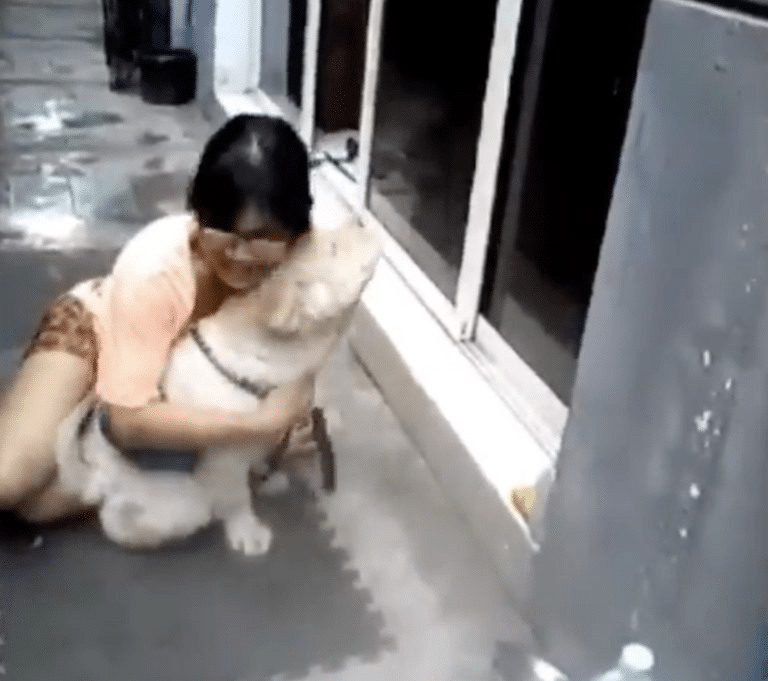
He looked like the dog he was always meant to be.
Today, Potchie lives a quiet, comfortable life surrounded by people who see him not as a burden, but as a gift. He enjoys simple pleasures—soft bedding, gentle walks, warm afternoons, and long, peaceful naps. These moments may seem ordinary, but to a dog who once had nothing, they mean everything.
Potchie’s journey is a reminder that healing does not erase the past—but it can reshape the future.
His story speaks to resilience, patience, and the power of compassion. It shows that even after years of neglect, trust can be rebuilt. That progress doesn’t have to be fast to be meaningful. And that one act of kindness can change the course of a life.
Once chained by circumstance and nearly invisible to the world, Potchie now moves freely—carrying with him a quiet strength earned through survival and care.
Every day he lives is proof that even the most broken beginnings can lead to beautiful endings.