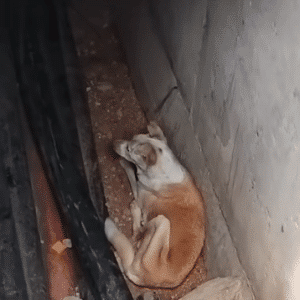
The call that changed Angelito’s life didn’t come with panic or urgency in the voice. It wasn’t dramatic. It was simple, steady, and quietly alarming. Someone had spotted a dog inside an abandoned structure on the edge of town—a place long ignored, where time seemed to have stopped. The message was brief but heavy with uncertainty: the dog was barely moving, and no one knew how long he had been there. There was a real chance he might not survive long enough to be helped.
Still, hope was enough to act.
When the rescue team arrived, the building felt frozen in silence. Its cracked walls and sagging roof told stories of years without care. Dust hung in the air. Sunlight struggled to push through narrow openings, barely reaching the ground inside. And there, tucked into a dark corner as if trying to disappear, lay a small, fragile dog.
He didn’t lift his head when footsteps approached. He didn’t bark or whimper. He simply breathed—slowly and unevenly—each breath looking like a conscious effort. His body was curled in on itself, conserving what little energy remained. It was clear he had been surviving, not living.
They would later name him Angelito.
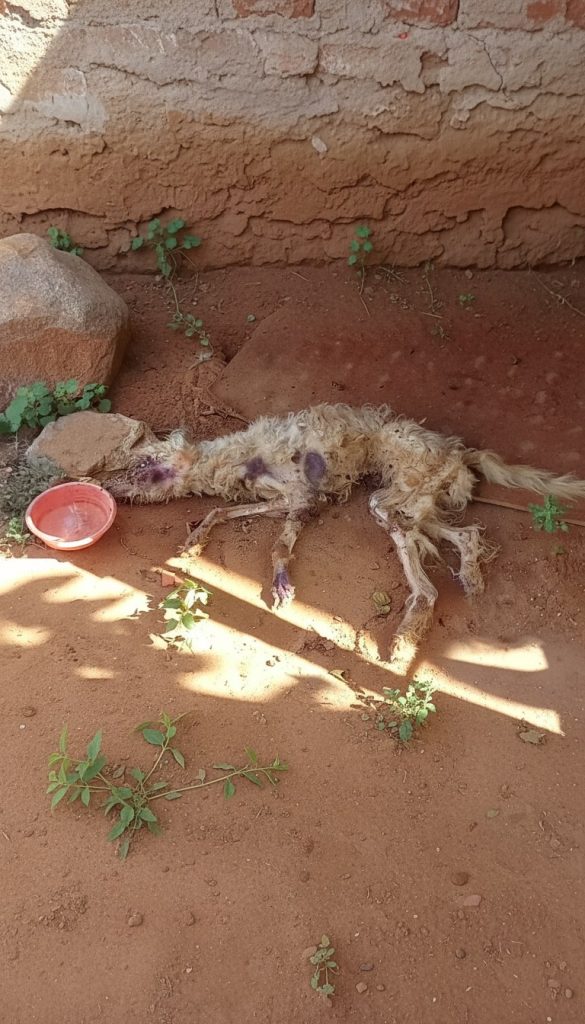
Up close, the signs of long-term neglect were impossible to ignore. His frame was thin, his muscles weak from disuse. One eye was gone, lost to an injury that had never been treated. His skin bore the quiet history of old wounds and infections that had healed improperly or not at all. This was not the result of a recent accident. This was the slow damage caused by being forgotten.
Yet even in that condition, Angelito was still here.
VideoFrom Forgotten to Flourishing: Angelito’s Long Road Back to Trust, Strength, and a Place to Belong
As rescuers knelt beside him, they spoke softly, careful not to overwhelm him. When they gently wrapped him in a blanket, his body trembled—but he didn’t resist. Instead, he leaned into the warmth, as if recognizing safety even before fully understanding it. In that moment, there was no debate. Angelito was not going to be left behind again.
The drive to the veterinary clinic was quiet. Someone watched his breathing closely. Someone else kept a hand on his side, offering reassurance through gentle touch. The road hummed beneath them, carrying a fragile mix of hope and fear. No one said it out loud, but everyone wondered the same thing: would he make it?
At the clinic, Angelito was met with calm urgency. Warmth was the first priority. Fluids followed, administered carefully to avoid overwhelming his weakened system. The veterinary team moved with focus and compassion, treating him not as a case, but as a life that mattered. There were no rushed movements, no assumptions about what he could or couldn’t survive. Only patience.
The first few days were the hardest.
Angelito couldn’t stand. Eating took time and encouragement. Rest came in short, interrupted stretches. Progress wasn’t measured in dramatic changes, but in subtle signs: steadier breathing, a slight shift of his head, a quiet response to familiar voices. Each small improvement was treated as a victory.
Then, one morning, something remarkable happened.
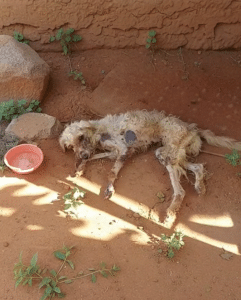
Angelito lifted his head on his own.
It was a simple movement, barely noticeable to anyone who didn’t know how fragile he’d been. But for the people caring for him, it meant everything. It wasn’t just physical improvement—it was intention. He was choosing to stay.
From that moment on, recovery became a shared journey. Angelito stood for a few seconds one day, then a little longer the next. He took careful steps, his body learning balance and strength again. When someone reached out to him, his tail moved gently, not out of excitement, but quiet acknowledgment. Trust was returning.
Volunteers began spending time with him, drawn by his calm presence. Angelito didn’t demand attention. He didn’t cry out. He simply existed peacefully, offering a grounding sense of resilience to everyone around him. Sitting beside him felt like a reminder that gentleness could survive even the hardest circumstances.
Weeks passed, and the changes became undeniable. Angelito’s appetite improved. His movements grew more confident. He discovered simple comforts he’d likely never known—a soft bed, the warmth of sunlight through a window, the predictability of daily care. These weren’t luxuries. They were basic kindnesses that transformed his world.
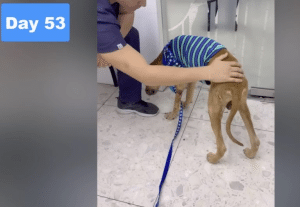
People followed his progress quietly, sending messages of encouragement and support. His story didn’t spread because it was shocking or sensational. It resonated because it was human in the deepest sense. It was about patience. About consistency. About showing up day after day, even when progress was slow.
Months later, Angelito was almost unrecognizable from the dog found curled in the shadows. He walked steadily now, enjoying short outings and gentle exploration. His remaining eye was bright and alert, full of awareness. His posture reflected comfort instead of fear. The scars on his body were still there, but they no longer defined him. They told a story of endurance, not defeat.
Those who helped him often say Angelito gave them something in return. He reminded them why compassion matters. Why it’s worth stopping, noticing, and choosing to care—even when the outcome is uncertain.
Today, Angelito lives surrounded by warmth and routine. He enjoys peaceful days, soft blankets, and the steady presence of people who see him not for what he once endured, but for who he has become. His life is no longer measured by survival alone, but by comfort, trust, and belonging.
Angelito’s journey proves that hope doesn’t always arrive loudly. Sometimes it comes quietly, carried by patience and kindness, waiting for someone to notice. And when it does, even a life once left behind can find its way back into the light.