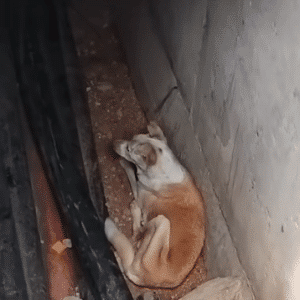
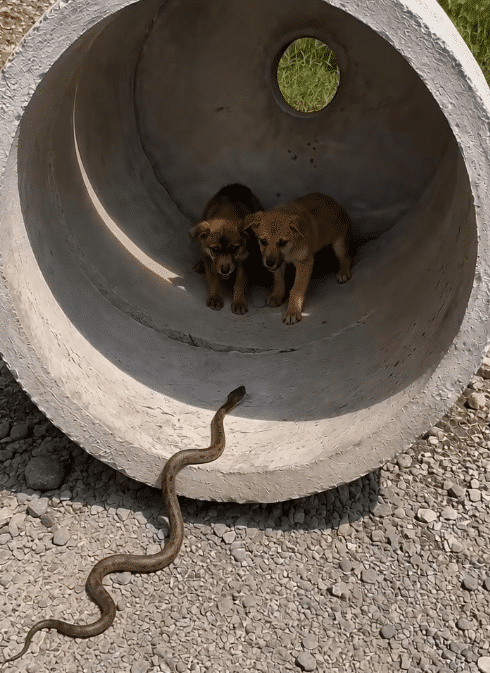
Stray dogs are masters of survival. Over time, many learn to fade into the background, choosing quiet corners and overlooked spaces where they can exist without drawing attention. Abandoned buildings, empty lots, and narrow alleys often become their sanctuaries—places where they can rest, observe, and avoid danger. For most strays, staying hidden is a form of protection. But every now and then, a dog chooses a refuge so unexpected that it stops people in their tracks.
That was the case for a small, quiet dog who somehow turned a working elevator into his temporary home.
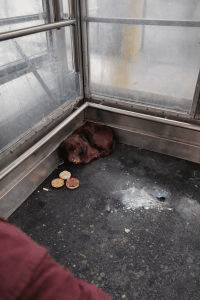
Unlike many street dogs, this little pup didn’t show obvious signs of abuse. There were no visible wounds or scars that told a story of cruelty. Instead, his behavior suggested something more subtle: a deep preference for solitude and safety. He didn’t beg for attention or wander the platforms searching for food. Instead, he stayed inside the elevator used daily by railroad employees, riding it up and down without protest, as if the steady movement offered him a strange sense of security.
Day after day, the elevator went about its routine, and the dog went along with it. He never barked, never caused trouble, and never interfered with the workers. He simply curled up quietly, making himself as small and invisible as possible. To him, the elevator wasn’t a machine—it was a shelter from the outside world.
But while the dog appeared calm, the situation was far from safe. Elevators aren’t designed for animals, and one unexpected moment could have led to serious injury. A door closing too fast, a startled reaction from a worker, or a sudden mechanical issue could have put his life at risk. It was only a matter of time before someone realized that this quiet arrangement couldn’t continue.
Word of the unusual situation eventually reached Suzette Hall, the founder of Logan’s Legacy 29 in California. Known for stepping in when animals are living in dangerous or overlooked circumstances, Suzette immediately understood the urgency. While some railroad employees had shown kindness by leaving food behind, she knew that survival wasn’t the same as safety. This dog needed help, stability, and a future beyond an elevator ride.
VIDEO Elevator Dog Finds Safety, Trust, and a Second Chance at Life
Suzette reached out to her friend Mary Nakiso, who was nearby and ready to assist. With permission from a railroad employee, Mary carefully approached the elevator. The environment was loud, unpredictable, and filled with unfamiliar sounds—hardly comforting for a small dog who already preferred isolation.
When the elevator doors opened, Mary saw him clearly for the first time. The little dog was tense, his body stiff, his eyes alert to every noise and movement around him. He wasn’t aggressive, but fear lingered just beneath the surface. The elevator may have been his refuge, but it was also a source of constant stress.
Mary moved slowly and spoke softly, allowing him time to process her presence. At first, he kept his distance, unsure whether this human meant harm or help. Trust doesn’t come easily to dogs who have lived on their own, even if they haven’t experienced direct abuse. Over time, patience and calm can make all the difference.
Gradually, the dog’s posture softened. He watched Mary closely, listening to her gentle voice. When she extended her hand, she did so without pressure, letting him decide whether to move closer. That moment—when he finally allowed her near—marked a quiet but powerful turning point.
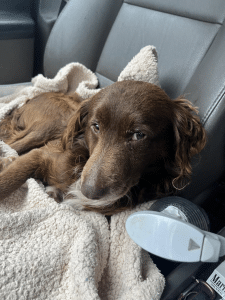
Mary carefully wrapped him in warmth and lifted him into her arms. With the help of nearby workers who held the elevator doors open, she carried him out of the space that had once felt like home but was never meant to be. It was the first time the dog experienced more than just food being left behind. This time, human hands offered comfort, protection, and reassurance.
From there, the journey continued to a safe shelter in California. For the first time in his life, the elevator dog had a stable place to rest, regular meals, and access to medical care. But just as important as physical safety was emotional healing. The shelter staff focused on helping him learn that humans could be trusted—that gentle voices, consistent routines, and kind touch were not threats.
The transition wasn’t instant. Dogs who have lived quietly on the fringes often need time to adjust to structured environments. New sounds, new faces, and new expectations can feel overwhelming. But day by day, the little dog began to relax. He ate more confidently, rested more deeply, and started showing curiosity about the world beyond his previous hiding place.
His story is a powerful reminder of how easily animals can be overlooked—and how quickly their lives can change when someone decides to act. It didn’t take a dramatic rescue or a dangerous chase. It took awareness, compassion, and a willingness to step in before something went wrong.
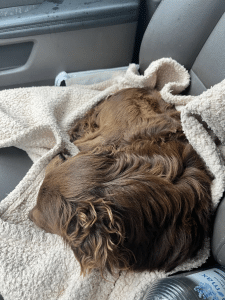
Now surrounded by caregivers who understand his gentle nature, the elevator dog is learning what it means to feel secure. The goal ahead is simple but profound: a forever home where he can stretch out without fear, play without worry, and sleep without needing to stay alert.
After spending so much time tucked away in a moving metal box, this quiet, affectionate dog is finally discovering that he no longer needs to hide. His future holds something far better than survival—it holds comfort, trust, and the promise of a life filled with warmth.
His journey proves that hope can appear in the most unexpected places. And sometimes, all it takes to change a life is noticing a small dog in a place he doesn’t belong—and choosing to help him find where he truly does.