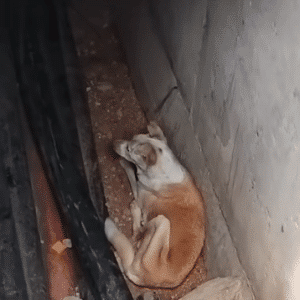
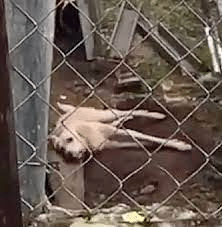
The storm that night was relentless. Cold rain hammered the ground, wind rattled everything in its path, and in the middle of it all, a lone dog cried out for help. Her voice was weak, strained, and easy to ignore—but it carried the weight of abandonment. Left alone in a flooded, rain-soaked yard, she had been discarded by the very person meant to protect her. While neighbors heard her cries and tried to intervene, the owner showed no urgency, no concern, and no compassion. Time passed, and with each hour, her condition worsened.
It wasn’t until local authorities stepped in that the situation finally changed. By then, the damage had already been done. When rescuers arrived, they were met with a sight that stopped them cold. The dog lay still, soaked through, her body frail and unresponsive. She was alive, but barely. Her strength had been drained by hunger, exposure, and prolonged neglect. What should have been a simple rescue had turned into a race against time.
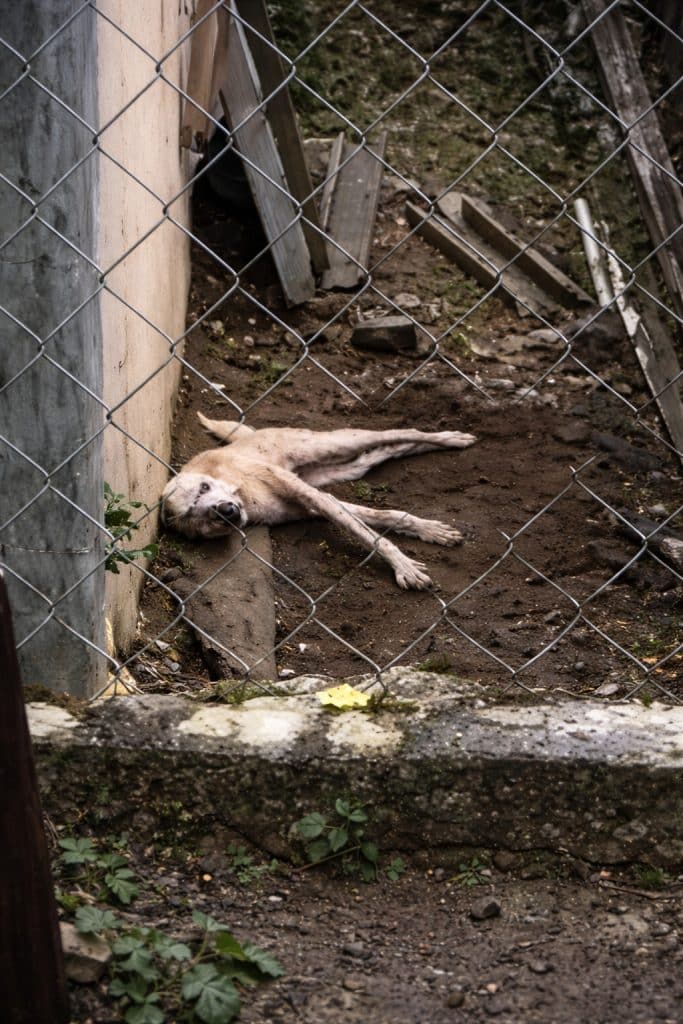
They named her Sita.
At the veterinary clinic, the atmosphere was tense. Sita was in critical condition—severely dehydrated, dangerously weak, and unable to move her body properly. She appeared almost frozen in place, as if her body had shut down in self-protection. The veterinary team worked carefully, stabilizing her temperature, restoring fluids, and running tests to understand what they were dealing with. Emotionally, she was just as fragile. Her eyes avoided contact, her body remained stiff, and every unfamiliar sound made her flinch.
As the days passed, the diagnosis arrived—and it was devastating.
Sita was suffering from granulomatous meningitis, a rare and serious neurological condition that affects the nervous system. It is an illness with no easy cure and an uncertain outcome. The prognosis was guarded at best. Doctors could not promise she would regain mobility. They could not even promise she would survive long-term. All they could offer was supportive care, pain management, and cautious hope.
For many dogs, that would have been the end of the story.
But Sita was not like most dogs.
Despite her weak body, there was something unmistakable in her presence—a quiet determination, a refusal to fully surrender. Even when she could not stand, she tried. Even when her legs would not respond, her eyes followed movement, her ears lifted at gentle voices. She listened. She stayed present. She held on.
VIDEO Sita’s Unbreakable Spirit: How One Abandoned Dog Defied the Odds and Found Her Way Back to Life
Her recovery did not come quickly, and it did not come easily.
Days turned into weeks of careful monitoring, medication, physical therapy, and constant encouragement. Progress was measured in inches, not miles. A small twitch of a paw. A longer moment holding her head up. A deeper breath without visible strain. Every tiny improvement felt monumental to those caring for her.
There were setbacks too. Days when she seemed exhausted. Moments when fear crept back into her eyes. But the people around her never gave up. They spoke softly. They celebrated every effort. They treated her not as a diagnosis, but as a life worth fighting for.
And then came the moment no one will ever forget.
One day, during a routine therapy session, Sita pushed against the floor. At first, her legs trembled violently. Her body swayed. Everyone held their breath. For a brief second, it looked like she would collapse again—but she didn’t. She stood. Unsteady. Weak. But standing on her own.
That single moment changed everything.
Tears filled the room—not just from relief, but from awe. Against medical expectations, against every doubt, Sita had done the impossible. That first stand was not just a physical milestone; it was proof of her will to live. Proof that even when the odds are stacked high, resilience can still break through.
From there, progress continued.
With ongoing therapy, Sita began to take steps. Slow, deliberate, and cautious steps—but steps nonetheless. Her confidence grew alongside her strength. She learned that her body, though damaged, was not broken beyond repair. She learned that humans could be trusted again. She learned that the world held more than pain.
Emotionally, she blossomed.
The dog who once lay silent and withdrawn began to respond with curiosity. She enjoyed gentle walks, soft beds, and the comfort of routine. Her eyes, once clouded with fear and confusion, now shone with clarity and warmth. There was joy in her expressions—a quiet joy, earned through hardship.
Sita’s life today looks nothing like the night she was left in the storm.
She walks. She plays. She rests without fear. She knows safety. While her condition will always require care and monitoring, it no longer defines her existence. Instead, she is defined by courage, perseverance, and the incredible capacity animals have to heal when given a chance.
Her journey is a powerful reminder of what compassion can do.
Sita did not survive because of luck alone. She survived because people chose to care when it would have been easier to look away. She survived because patience replaced urgency, and empathy replaced indifference. She survived because someone believed that even a broken body could still hold a whole heart.
Every step she takes now is a testament to resilience.
Her story teaches us that recovery is not always fast, and it is rarely simple—but it is possible. That even in the darkest moments, hope can exist quietly, waiting to be nurtured. And that no matter how abandoned or forgotten a life may seem, it is never beyond saving.
Sita’s past will always be part of her story—but it is no longer the ending.
Today, she moves forward with strength, dignity, and a future built not on suffering, but on love.