Julius’s story began quietly, in a way that could have gone unnoticed.
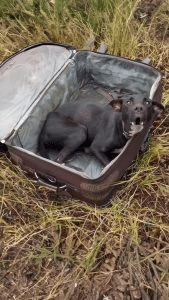
In an open field, far from help, a closed suitcase lay abandoned in the grass. There were no voices nearby. No signs that anyone planned to return. Inside, a small black dog lay curled and trembling. Julius was blind. He couldn’t walk. Rain soaked through the fabric, and the cold settled in. In that darkness, it must have felt as though the world had simply moved on without him.
There were no explanations left behind.
No second chances offered.
Just silence.
When rescuers finally discovered the suitcase and opened it, the reality was impossible to ignore. Julius was barely holding on. His body was frail, his breathing shallow, his eyes clouded and unfocused. Every sign pointed to long-term neglect. There was no time to process the cruelty of what had been done. Julius needed help—immediately.
He was rushed to a veterinary hospital, where the medical team began careful examinations. The outlook was serious. Julius was severely dehydrated and malnourished, and his condition suggested a serious neurological illness. His body was exhausted, struggling to cope after so much time without care. The veterinarians spoke honestly about the risks ahead. Survival was uncertain.
Still, the rescuers didn’t give up.
When they spoke to Julius softly and touched him gently, they sensed something that couldn’t be measured by tests. He was still present. Still responding. Still fighting in the quietest way he could.
VIDEO: From Abandonment to Hope — Julius’s Journey of Survival and Transformation
The first days were fragile. Julius needed constant monitoring and supportive care. Each hour felt uncertain. But then, something small changed. One morning passed more calmly than the last. Julius seemed more alert. He lifted his head slightly, responding to familiar voices around him.
That small moment mattered.
Soon after, Julius managed to eat on his own for the first time. It wasn’t much, but it was enough to shift the mood in the room. It meant his body hadn’t given up. It meant his will was still there.
Recovery did not come quickly.
Julius required ongoing treatment and patient care. His muscles were weak, and movement was difficult. With gentle guidance and physical therapy, he began relearning how to use his body again. Each effort was slow. Each attempt took energy. But progress came—one careful movement at a time.
As the weeks passed, a transformation began to take shape.
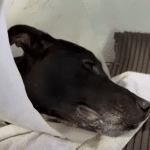
Julius grew stronger. His appetite improved. His responses became more confident. Though he could not see, he adapted in remarkable ways. He learned the sounds of footsteps, the rhythm of daily routines, the reassurance of gentle touch. He responded with soft tail movements and calm affection, forming connections built on trust rather than sight.
The dog who once lay helpless in darkness began to show his personality.
He became affectionate. Curious. Calm.
Despite everything he had endured, Julius carried no bitterness. Instead, he met care with acceptance, as if grateful simply to be included again. His resilience quietly inspired everyone around him.
When Julius was finally strong enough, a family stepped forward to offer him a home. Adoption day marked a new beginning—one defined not by abandonment, but by stability and love. The dog once left behind without explanation now had a place where he was wanted, protected, and understood.
Today, Julius’s life looks very different.
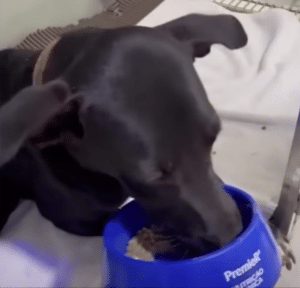
He rests comfortably. He follows familiar voices. He enjoys routines that bring him peace. His past no longer defines him—it informs his strength.
Julius’s journey is not just about survival. It’s about what happens when compassion arrives in time. It’s proof that even in the darkest situations, hope can still take root.
He was left behind in silence.
But he was never truly forgotten.
And because someone chose to care, Julius’s story continues—not as tragedy, but as quiet victory.